
Your roof is the single hardest-working part of your home. It absorbs summer heat, sheds winter snow, deflects wind-driven rain, and does it all silently, until the day it doesn’t.
Most homeowners only think about their roof when something breaks. By then, a problem that could have cost a few hundred dollars to fix has quietly grown into a multi-thousand-dollar repair. The truth is, most serious roof damage follows a predictable pattern: a small, overlooked issue escalates into something structural.
► U.S. roof repair and replacement costs reached nearly $31 billion in 2024, a 30% jump since 2022, driven by more frequent severe weather events and deferred maintenance. (Verisk, 2025)
Understanding the most common roofing problems, what causes them, what they look like from the outside and inside your home, and what the right fix actually involves, gives you a real advantage as a homeowner. It’s the difference between a $500 repair and a $15,000 roof replacement.
This guide breaks down the 10 roofing problems that professionals encounter most often, with honest explanations of severity, cost, and what to do about each one.
Quick Reference: The 10 Most Common Roofing Problems at a Glance
| # | Roofing Problem | Severity | Avg. Repair Cost | DIY-Friendly? |
| 1 | Roof Leaks | High | $300, $1,500 | Rarely |
| 2 | Faulty or Failed Flashing | High | $400, $1,200 | No |
| 3 | Missing or Damaged Shingles | Medium | $200, $1,000 | Sometimes |
| 4 | Poor Roof Ventilation | Medium | $300, $900 | No |
| 5 | Clogged or Damaged Gutters | Medium | $150, $600 | Yes |
| 6 | Ponding / Standing Water | High | $500, $3,000 | No |
| 7 | Roof Shrinkage & Blistering | Medium | $400, $2,000 | No |
| 8 | Ice Dams | High | $500, $2,500 | Partially |
| 9 | Moss, Algae & Biological Growth | Low-Med | $200, $800 | Partially |
| 10 | Improper Installation | High | Varies widely | No |
Roofing Problem #1: Roof Leaks, The Silent Destroyer
Roof leaks are the most common and most damaging roofing problem homeowners face. They’re also the most deceptive, by the time water stains appear on your ceiling, the leak has often been active for weeks or months, quietly saturating insulation, rotting decking, and encouraging mold growth you can’t see.
What Causes Roof Leaks?
Leaks rarely have a single cause. The most common culprits include:
- Cracked or missing shingles that leave the underlayment exposed
- Failed or improperly installed flashing around chimneys, vents, and skylights
- Ice dams forcing water beneath shingles in cold climates
- Worn pipe boots and deteriorated sealant around roof penetrations
- Clogged gutters backing water up under the roof edge
- Age-related membrane degradation on flat roofs
Warning Signs to Watch For
- Water stains or discoloration on ceilings and interior walls
- Musty odor in the attic, often a sign of hidden moisture
- Visible daylight through the roof boards when you’re in the attic
- Missing or curling shingles visible from the ground
- Dripping water or wet insulation after rain
► What most people don’t realize: water entering your roof doesn’t stay where it enters. It travels along rafters, decking, and insulation before showing up inside. The interior stain is rarely directly below the actual leak point.
What Should You Do?
At the first sign of a leak, act immediately. The damage compounds fast once water is inside the roof system. Temporary tarping can buy time, but a professional inspection is essential to find the actual source, not just where water is presenting inside the home. Minor flashing seals or single-shingle repairs can cost $300, $600. Widespread water damage affecting the decking and rafters can run $2,000, $5,000 or more.
Roofing Problem #2: Faulty Flashing, the #1 Source of Leaks
Ask any experienced roofer where most leaks actually originate, and the answer is almost always the same: the flashing. Flashing is the thin metal, typically aluminum, galvanized steel, or copper, installed at every roof joint, seam, and penetration: chimneys, skylights, vent pipes, roof valleys, and wall-to-roof transitions.
These are structurally the weakest points on any roof. Flashing exists specifically to seal them. When it fails, water finds its way in almost immediately.
Why Flashing Fails
- Poor original installation, gaps, insufficient overlap, wrong sealant used
- Thermal expansion and contraction over years of weather cycling
- Rust and corrosion on older galvanized steel flashing
- Physical damage from hail, falling branches, or foot traffic on the roof
- Sealant drying out and cracking over time, especially around chimney bases
What It Looks Like
- Visible rust streaks running down the exterior wall below the chimney or skylight
- Water stains on ceilings in rooms directly below penetrations
- Visible gaps or lifted edges on flashing when viewed from the ground
- Deteriorated caulking or sealant visible around vent collars
| Flashing Location | Common Failure Mode | Urgency Level |
| Chimney | Mortar deterioration, step flashing gaps | High |
| Skylights | Sealant shrinkage, improper overlap | High |
| Roof Valleys | Debris accumulation, corrosion | Medium-High |
| Vent Pipes | Worn pipe boots, cracked rubber collars | Medium |
| Wall-to-Roof Joins | Separation from wall, insufficient overlap | High |
| Dormer Edges | Settlement movement, improper installation | Medium |
Flashing repair is not a DIY job. Improper flashing installation, even in repair, is itself one of the top causes of new roof leaks. A licensed roofer should assess and address flashing issues.
Roofing Problem #3: Missing, Cracked, or Curling Shingles
Shingles are the first line of defense against rain, wind, hail, and UV exposure. When they’re compromised, missing entirely, cracked from impact, curling at the edges, or losing granules, the protective system below them is exposed. What follows is usually a leak.
The Stages of Shingle Deterioration
- Granule loss, shingles begin shedding the protective mineral coating. You’ll notice granules collecting in gutters.
- Curling, edges begin to lift (cupping) or the center bends up (clawing). Both indicate moisture damage or age.
- Cracking, shingles become brittle and develop visible cracks or splits.
- Missing shingles, wind lifts and removes entire shingles. Even a single missing shingle creates immediate leak risk.
Common Causes
- Storm damage: hail impacts crack shingles; high winds lift and remove them
- Age: most asphalt shingles have a 20, 30 year lifespan; older roofs deteriorate faster
- Improper installation: shingles nailed too high or with insufficient nails are far more vulnerable to wind
- Poor attic ventilation: heat and moisture buildup from below accelerates shingle deterioration
► Asphalt shingles are still the most common roofing material in the U.S., used in roughly 80% of residential roofing projects. Their prevalence means shingle damage is among the most frequently reported roof insurance claims.
Fix or Replace?
Individual cracked or missing shingles can be replaced without a full roof replacement, as long as the surrounding area and the underlying decking are undamaged. The challenge is matching existing shingles. If your roof is more than 15 years old and damage is widespread, replacement becomes the smarter long-term decision. Patching an aging roof piece by piece becomes expensive faster than most homeowners expect.
Roofing Problem #4: Poor Roof Ventilation, The Hidden Accelerator
Of all the roofing problems on this list, inadequate ventilation is the most underestimated. Most homeowners don’t think about their attic airflow at all. But poor ventilation is a hidden accelerator of almost every other roofing problem, it shortens shingle life, invites moisture damage, contributes to ice dams in winter, and drives energy bills higher year-round.
How Ventilation Works
A healthy roofing system moves air continuously through the attic space. Cool outside air enters through soffit vents at the eaves. Warm, moist air rises and exits through ridge vents or box vents near the peak. This circulation prevents two destructive conditions:
- Summer overheating: without ventilation, attic temperatures can exceed 150°F, cooking shingles from below and dramatically shortening their lifespan
- Winter moisture buildup: warm, humid air from living areas rises into the attic; without exhaust, it condenses on the cold roof decking, causing rot, mold, and eventually structural failure
Signs Your Roof Ventilation Is Failing
- Shingles are blistering, cracking, or deteriorating faster than expected for their age
- Ice dams form every winter along the roof edge
- The attic feels excessively hot in summer or shows frost/condensation in winter
- Energy bills are noticeably higher than comparable homes nearby
- Mold or mildew on attic insulation or the underside of roof decking
Fixing ventilation issues is a job for a professional roofer or an attic specialist. Solutions range from adding soffit vents and ridge vents ($300, $600) to a complete ventilation system redesign. The investment almost always pays off in extended roof life and reduced energy costs.
Roofing Problem #5: Clogged or Damaged Gutters, Small Neglect, Big Consequences
Gutters are an extension of your roofing system, not a separate concern. When they fail, through clogging, damage, or improper slope, the effects go directly back to your roof and, eventually, to your foundation.
What Happens When Gutters Are Neglected
When gutters fill with leaves, debris, and compacted sediment, water has nowhere to go. It overflows. On the way, it:
- Backs up under the drip edge and shingles at the roof’s edge, saturating the fascia board and eventually the decking
- Creates ideal conditions for ice dams when water-logged debris freezes in winter
- Allows water to pool against the foundation, causing basement moisture issues over time
- Adds weight that pulls gutters away from fascia boards, damaging the connection points
Gutter Maintenance Schedule
| Season | Task | Why It Matters |
| Spring | Clear winter debris; inspect for frost damage and sags | Ice and snow weight bends gutters; debris from winter lingers |
| Summer | Check downspout flow during heavy rain; inspect seams | Summer storms test drainage capacity |
| Fall | Clear fallen leaves, twice if possible (pre and post) | The most critical clearing of the year; prevents winter ice backup |
| After Storms | Check for dislodged sections or sagging after high winds | Wind and debris weight can loosen gutter connections |
Gutter clearing is one of the few roof-related maintenance tasks homeowners can safely do themselves from a ladder. For two-story homes, hiring a professional annually ($100, $250) is often the safer and more thorough choice.
Roofing Problem #6: Ponding Water on Flat Roofs
Ponding water is the dominant problem on flat and low-slope roofs, which makes it particularly relevant for the large share of U.S. commercial buildings and urban residential properties (brownstones, row houses, apartment buildings) that use flat-roof systems.
A flat roof is designed to drain, quickly. Even minor standing water that remains for 48 hours or more after rainfall begins to cause damage. Water finds every seam, every penetration, every aging membrane joint. And it’s patient.
Why Water Ponds
- Inadequate drainage design, too few drains for the roof’s area
- Clogged roof drains, debris accumulates and blocks the drain opening
- Structural settling, the building or roof deck shifts, creating low spots
- Aging insulation compression, insulation flattens over time, dipping in areas
- Improper slope, the original installation didn’t achieve the minimum recommended pitch
The Damage Timeline
| Timeframe | What’s Happening to Your Roof |
| 48, 72 hours | Membrane stress begins; organic growth starts to establish |
| 1, 2 weeks | Increased UV vulnerability; membrane softens in warm weather |
| 1, 3 months | Seam adhesion weakens; insulation begins absorbing moisture |
| 3, 12 months | Active leaks likely; decking may begin to rot |
| 1+ year | Structural damage to roof deck; replacement increasingly likely |
Solutions range from professional drain clearing and re-sloping insulation to adding additional drainage points or installing tapered insulation systems. This is always a job for a licensed roofing contractor with flat-roof experience.
Roofing Problem #7: Roof Shrinkage and Blistering
These two problems are grouped together because they often share the same root cause: compromised roofing membrane integrity. Both are common on flat roofs, but blistering also appears on standard asphalt shingle roofs.
Roof Shrinkage
Roof shrinkage happens when the roofing membrane, the base material beneath tiles, shingles, or on flat roofs, contracts. This pulling force creates tension across the entire surface. You’ll see its effects in:
- Shingles that are curling upward at the edges (cupping) or bowing in the center
- Flashing pulling away from walls and penetrations as the membrane drags on it
- Visible cracking along ridge lines or at roof transitions
Shrinkage accelerates when: the membrane was installed over a damp surface, when UV exposure is prolonged without adequate coating protection, or when the roof has reached the end of its material lifespan.
Blistering
Blistering appears as raised bubbles or bumps across the roof surface, on flat membrane roofs and on asphalt shingles. The cause is almost always trapped moisture or trapped air within the roofing layers.
- On flat roofs: moisture between the membrane and insulation, often from installation over damp substrate, expands when the roof heats up and creates bubbles
- On shingle roofs: volatile compounds within the asphalt rise to the surface during heat, or moisture trapped during installation creates blisters
► Small, intact blisters don’t necessarily require immediate action. Large blisters, anything over a few inches, and any blisters that have burst are active leak risks that need professional attention. Infrared scanning can identify wet insulation beneath the surface that isn’t yet visible.
Repair Approach
Small intact blisters on flat roofs can be monitored. Larger blisters require cutting open, thoroughly drying the area, applying compatible adhesive, and patching with matching membrane material. Shrinkage affecting flashing connections requires reflashing and, in severe cases, partial membrane replacement. Neither is a DIY repair.
Roofing Problem #8: Ice Dams, Winter’s Most Damaging Roof Problem
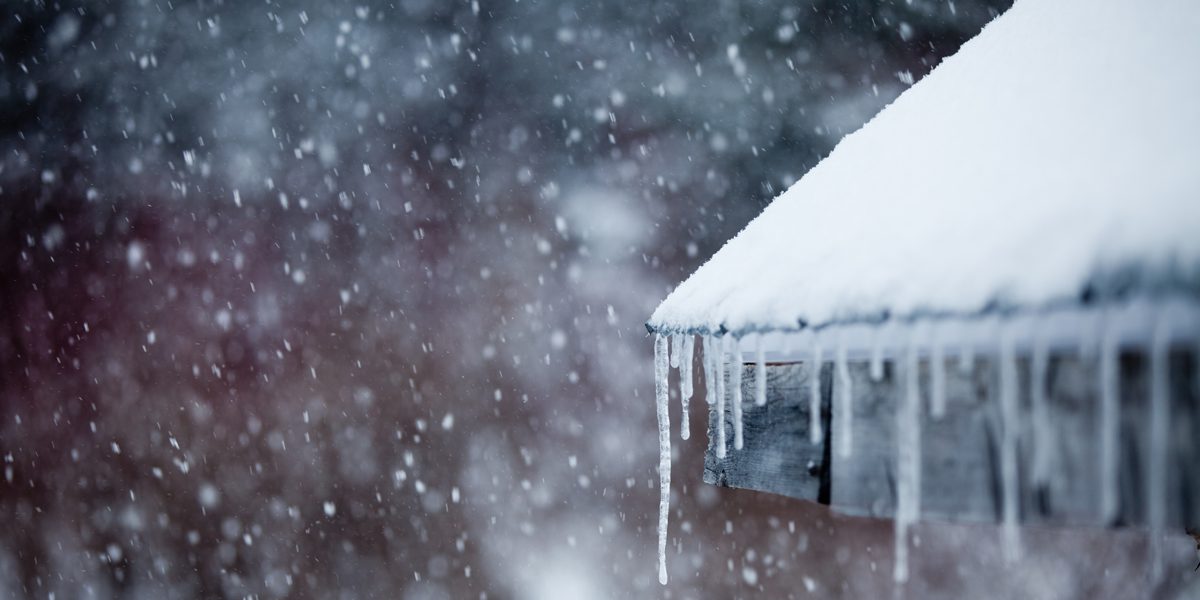
In colder climates, the Northeast, Midwest, Pacific Northwest, and most of Canada, ice dams are among the most destructive roofing problems homeowners face. They form silently in winter and cause damage that often doesn’t become visible until spring, when the ice melts and reveals water-stained ceilings and rotted decking.
How Ice Dams Form
The process is counterintuitive. Ice dams don’t form because the outside is cold enough to freeze water. They form because the roof surface isn’t uniformly cold.
- Heat escapes from the living space through the attic floor and roof deck, warming the upper portion of the roof.
- Snow on the warm upper roof melts and runs down toward the eaves.
- The eave overhang is cold, it has no warm attic air beneath it. The meltwater refreezes here.
- Ice builds up into a dam. Subsequent meltwater pools behind it, unable to drain.
- Pooled water backs up beneath shingles, the one direction shingles aren’t designed to repel water, and enters the roof structure.
The Damage Ice Dams Cause
- Water intrusion through shingles into the attic, damaging insulation and decking
- Ceiling stains, peeling paint, and drywall damage in rooms below
- Structural wood rot if moisture persists over multiple seasons
- Gutter damage from the weight of accumulated ice
- Mold growth in insulation and wall cavities
Short-Term vs. Long-Term Solutions
| Approach | What It Does | Limitation |
| Roof rake (snow removal) | Removes snow before it melts and refreezes | Labor-intensive; doesn’t address root cause |
| Ice melt channels | Cuts channels in existing ice to allow drainage | Temporary; must be done carefully to avoid shingle damage |
| Improved attic insulation | Keeps attic cold so roof surface stays uniform | Most effective long-term fix |
| Better attic ventilation | Flushes warm air before it heats the roof deck | Works best combined with insulation upgrade |
| Ice & water shield barrier | Protects the first 3, 6 feet of roof even if water backs up | Preventive, installed during re-roofing |
The permanent fix for ice dams is improving attic insulation and ventilation, the two root causes. Removing snow after storms helps, but only addresses the symptom.
Roofing Problem #9: Moss, Algae, and Biological Growth
Dark streaks running down your shingles. Green patches spreading along the shaded north side of your roof. These are signs of biological growth, algae, moss, and lichen, that millions of homeowners dismiss as cosmetic problems. They’re not.
Algae (Gloeocapsa Magma)
The black or dark gray streaks that appear on asphalt roofs in humid climates are almost always caused by Gloeocapsa magma, a cyanobacteria. It feeds on the limestone filler in asphalt shingles, gradually degrading the shingle material while darkening the surface. Beyond structural concern, dark roofs absorb more heat, which increases cooling costs and accelerates the thermal breakdown of shingles.
Moss
Moss goes further than algae. It grows between and under shingles, physically lifting their edges and creating gaps that let water and wind in. Moss holds moisture against the shingle surface, dramatically accelerating deterioration. In shaded areas of the roof, typically the north-facing slope and areas under overhanging trees, moss can establish and spread within a single season.
Lichen
Lichen is a combination of algae and fungus. It attaches firmly to shingle surfaces and, unlike algae and moss, is very difficult to remove without damaging the shingles beneath. By the time lichen is established, it has often already caused permanent surface damage.
| Growth Type | Appearance | Damage Level | Removal Method | Prevention |
| Algae | Black/dark gray streaks | Moderate | Soft-wash chemical clean | Algae-resistant shingles; zinc strips |
| Moss | Green/brown clumps | High | Brush + biocide treatment | Trim overhanging trees; zinc strips |
| Lichen | Gray-green crusty patches | High | Professional treatment | Prevention is far easier than removal |
► Do not pressure-wash a shingled roof to remove moss or algae. High pressure strips granules from shingle surfaces, dramatically shortening the roof’s lifespan. Soft-washing with appropriate biocide solutions is the correct approach.
Roofing Problem #10: Improper Installation, The Root of Many Problems
Every problem on this list can be accelerated, or outright caused, by a single factor: the roof wasn’t installed correctly in the first place.
Improper installation is a growing concern. As roofing demand surged with increasing storm activity and housing construction, the industry absorbed many undertrained contractors. The result: roofs that look fine on day one but develop serious problems within a few years.
What ‘Improper Installation’ Actually Means
- Shingles nailed too high or with too few nails, fails in wind at a fraction of the rated speed
- Inadequate nail depth, surface-driven nails that don’t penetrate the decking properly
- Skipped underlayment or inadequate ice-and-water barrier at eaves and valleys
- Flashing installed with gaps, wrong overlap, or incompatible sealant
- Ventilation system that wasn’t balanced, intake and exhaust mismatched
- Valleys cut incorrectly, open valleys without proper metal lining
- New shingles installed over too many old layers (code generally limits this to two layers maximum)
How to Protect Yourself
Once a bad roof is installed, your options are expensive. Prevention is far better:
- Verify the contractor’s license and insurance before signing anything
- Ask for a detailed written scope of work that specifies materials, nailing pattern, and ventilation plan
- Request references from comparable projects completed in the past two years and actually call them
- Understand that the lowest bid is often low for a reason, ask what’s different
- Have a third-party inspector verify the completed work before making final payment
► The workmanship warranty is your only protection against poor installation. Reputable contractors offer 5, 15 years on workmanship. Any contractor unwilling to provide a written workmanship warranty is telling you something important.
Roof Maintenance: The One Thing That Prevents All 10 Problems
Most of the roofing problems above share a common thread: they get dramatically worse when ignored. A $300 flashing repair becomes a $3,000 decking replacement. A $150 gutter clearing prevents a $4,000 fascia and soffit rebuild. The economics of roof maintenance are overwhelmingly favorable.
Twice-Annual Inspection Checklist
- Check all flashing points, chimney, vents, skylights, valleys, for gaps or separation
- Look for missing, cracked, or curling shingles from the ground with binoculars
- Clear gutters and confirm downspouts discharge away from the foundation
- Inspect the attic after rain: look for daylight, moisture, or staining on decking
- Check for blistering or ponding on flat roof sections
- Look for moss or algae establishing on north-facing slopes
- After any significant storm: inspect for wind-lifted shingles or debris damage
Professional Inspection Frequency
| Roof Age / Condition | Recommended Inspection Frequency |
| New roof (0, 5 years) | Every 3 years, or after major storms |
| Mid-life roof (5, 15 years) | Every 2 years + post-storm check |
| Older roof (15+ years) | Annually, more often if problems appear |
| Flat / membrane roof | Semi-annually, drainage is critical to maintain |
| After severe weather event | Immediately, even new roofs can sustain storm damage |
Repair vs. Replace: How to Make the Right Call
One of the most common questions homeowners ask after discovering a roofing problem is whether to repair the damaged area or replace the entire roof. Here’s a clear framework:
Repair Makes More Sense When:
- The roof is less than halfway through its expected lifespan
- Damage is genuinely localized, one area, not a pattern across the roof
- The repair cost is less than 35, 40% of what full replacement would cost
- The underlying structure (decking, rafters) is confirmed sound
- You plan to sell within 2, 3 years and need documented maintenance, not a full investment
Replacement Makes More Sense When:
- The roof is past 75, 80% of its expected material lifespan
- Problems keep returning in multiple areas, each repair reveals another
- The decking or structural components beneath are compromised
- A professional inspection shows widespread membrane degradation
- The repair quote exceeds 40% of replacement cost on an aging roof
► Industry rule of thumb: if a roof needs repair costs exceeding 40% of replacement value AND is more than halfway through its lifespan, replacement is almost always the better long-term financial decision.
Frequently Asked Questions
What is the most common roofing problem?
Roof leaks are the most common problem homeowners encounter, but flashing failure is the most common cause of those leaks. In practice, the two are closely linked, most residential roof leaks trace back to failed, deteriorated, or improperly installed flashing around chimneys, skylights, vents, or roof valleys.
How do I know if my roof has a problem?
Interior signs include water stains on ceilings or walls, musty attic odors, and peeling paint near ceiling lines. Exterior signs include missing or curling shingles visible from the ground, dark streaks or green patches on the roof surface, granules accumulating in gutters, and sagging sections. After any significant storm, check for newly lifted or missing shingles.
How much do common roofing repairs cost?
Minor repairs, sealing a small leak, replacing a few shingles, resealing flashing, typically run $300, $800. Moderate repairs covering larger areas, reflashing, or gutter replacement can cost $800, $2,500. Major repairs involving structural damage, decking replacement, or widespread membrane work run from $2,500 upward. Full roof replacement nationally averages $15,000, $27,000 depending on size and material.
Can roofing problems be prevented?
Most roofing problems, not all, but most, can be caught before they become expensive through twice-annual inspections and basic maintenance. Clearing gutters, trimming overhanging branches, keeping drains clear on flat roofs, and addressing small flashing issues promptly prevents the vast majority of the damage that leads to major repair bills.
How long does a roof last?
Lifespan varies significantly by material. Standard asphalt shingles: 20, 30 years. Architectural asphalt shingles: 25, 35 years. Metal roofing: 40, 70 years. EPDM flat roofs: 15, 25 years. TPO flat roofs: 20, 30 years. Slate: 75, 100+ years. All of these assume reasonable maintenance. A neglected roof of any material will fail years ahead of its rated lifespan.
When should I call a roofer vs. handle it myself?
Gutter clearing, removing surface debris, and trimming branches away from the roof are safe homeowner tasks. Anything that requires walking on the roof, working near penetrations, or assessing leak sources should involve a licensed professional. Roofing injuries are serious, the industry has one of the highest workplace fatality rates in construction, and improper DIY repairs often create new problems while leaving the original one unresolved.
What are signs of a failing roof that needs full replacement?
The clearest signs include shingles that are curling, cracking, or missing across multiple areas (not just one spot), granule loss severe enough to see bare mat through the granules, visible sagging of the roof deck, daylight visible through the attic roof boards, and recurring interior water damage despite multiple repairs. Any roof approaching or past 25 years deserves a professional assessment.
Does homeowner’s insurance cover roof damage?
Standard homeowner’s insurance covers sudden, accidental damage, storm damage, hail, wind, and fire. It does not cover damage resulting from age, neglect, or poor maintenance. Wind and hail now account for more than half of all residential roof insurance claims. Document damage thoroughly with photos immediately after any storm, before any temporary repairs, to support a claim.


