
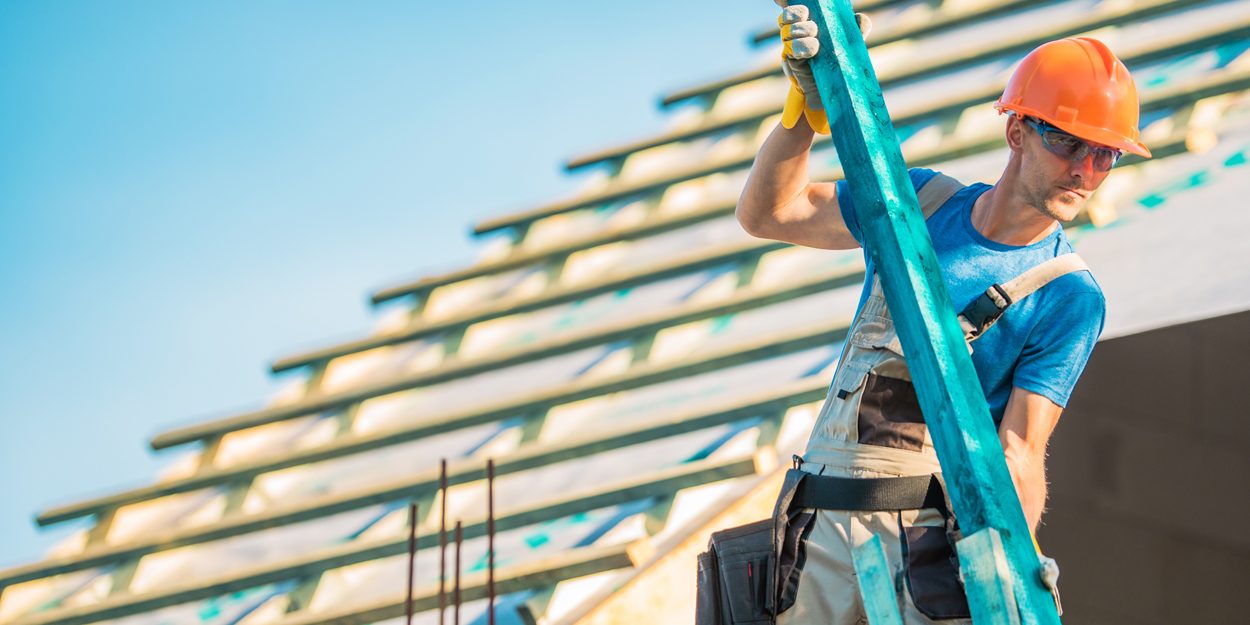
A commercial roof replacement is not priced like a simple product on a shelf. Two buildings can both have 20,000 square feet of roof area and still end up with very different quotes. One might be a clean warehouse with easy access and a dry deck. The other might have trapped moisture, old insulation, rooftop HVAC units, parapet walls, limited staging space, and code upgrades.
That is why most commercial roof replacement cost estimates start with a square-foot range, then tighten after an inspection.
Quick Answer: How Much Does Commercial Roof Replacement Cost?
Commercial roof replacement typically costs about $5.50 to $15.00 per square foot for many standard commercial roofing systems. Basic single-ply systems are usually toward the lower or middle part of that range, while PVC, built-up roofing, structural repairs, difficult access, or standing seam metal can push the project higher. Current industry cost guides commonly place standard commercial roof replacement around $5 to $15 per square foot, with TPO, EPDM, PVC, metal, BUR, and modified bitumen varying by material and project conditions.
| Roof Size | Planning Range at $5.50–$15.00/Sq. Ft. | What This Means |
|---|---|---|
| 5,000 sq. ft. | $27,500–$75,000 | Small commercial roof, often higher per sq. ft. due to setup costs |
| 10,000 sq. ft. | $55,000–$150,000 | Common range for retail, office, restaurant, and light industrial roofs |
| 20,000 sq. ft. | $110,000–$300,000 | Larger roof with better scale, but costs rise with tear-off or insulation |
| 50,000 sq. ft. | $275,000–$750,000 | Large warehouse or facility; material choice has a major budget impact |
These numbers are useful for early budgeting. A real proposal should include roof inspection findings, tear-off scope, insulation plan, drainage details, flashing work, warranty type, disposal, access equipment, and permit-related costs.
Average Commercial Roof Replacement Cost by Material
The roofing system you choose has the biggest influence on the estimate. For low-slope commercial roofs, the most common choices are TPO, EPDM, PVC, modified bitumen, built-up roofing, metal roofing, and roof coating systems when the existing roof qualifies for restoration rather than full replacement.
The ranges below synthesize public commercial roofing cost data from multiple industry sources and should be treated as planning numbers, not final bids.
| Commercial Roofing Material | Average Installed Cost Per Sq. Ft. | Typical Lifespan | Best Fit | Cost Notes |
|---|---|---|---|---|
| TPO roofing | $5–$10+ | 20–30 years | Warehouses, retail, office buildings, large flat roofs | Strong value, reflective surface, heat-welded seams |
| EPDM roofing | $5.50–$11+ | 20–35 years | Large flat roofs, budget-sensitive buildings, colder climates | Often lower upfront cost; seam detailing matters |
| PVC roofing | $7–$14+ | 25–35+ years | Restaurants, industrial buildings, chemical exposure areas | Higher cost, strong chemical resistance |
| Modified bitumen | $5–$12 | 15–25 years | Smaller commercial roofs, roofs with foot traffic | Durable asphalt-based system, often layered |
| Built-up roofing, or BUR | $6–$14 | 20–40+ years | Heavy-duty commercial roofs, high-traffic roofs | Labor-intensive, multi-layer waterproofing |
| Metal roofing | $8–$15+ | 25–50+ years | Sloped commercial roofs, warehouses, long-term owners | Higher upfront cost, long service life |
| Commercial shingles | $4–$10+ | 20–30+ years | Steep-slope offices, churches, mixed-use buildings | Less common for flat commercial roofs |
| Roof coating or restoration | $2–$5 | Varies | Dry, serviceable roofs needing life extension | Not a full replacement; only works when the roof qualifies |
TPO Roofing Cost
TPO roofing usually costs around $5 to $10+ per square foot installed, depending on membrane thickness, attachment method, insulation, tear-off, and roof complexity. TPO is popular because it gives many commercial owners a good mix of cost control, reflectivity, and performance. GAF describes TPO as a thermoplastic polyolefin membrane with “proven performance at great value,” and white reflective roof surfaces can reduce heat absorption compared with dark roofs.
TPO is often a smart fit for:
- Warehouses
- Retail centers
- Offices
- Schools
- Large low-slope commercial roofs
- Buildings where cooling costs matter
A real-world example: a 20,000-square-foot warehouse with a straightforward deck and minimal penetrations may land near the middle of the TPO range. A smaller restaurant with grease vents, rooftop units, and tricky flashing may cost more per square foot even if the roof is much smaller.
EPDM Roofing Cost
EPDM roofing often falls around $5.50 to $11 per square foot installed. It is a rubber membrane that has been used on commercial flat roofs for decades. It can be cost-effective on large roofs, especially when the building owner wants a practical system without paying for premium PVC or metal.
EPDM can be a good choice for:
- Large, simple roof areas
- Buildings in cooler regions
- Budget-conscious owners
- Roofs where repairability is important
The tradeoff is seam performance. EPDM seams rely on adhesives or seam tapes, while TPO and PVC seams are heat-welded. That does not make EPDM a poor choice, but it does mean installation quality and maintenance history matter.
PVC Roofing Cost
PVC roofing typically costs around $7 to $14+ per square foot installed. PVC is usually priced higher than TPO and EPDM, but it earns that premium in demanding environments. GAF describes PVC membranes as offering flexibility and chemical resistance, making them useful where rooftop exposure is harsher than normal.
PVC is often worth pricing for:
- Restaurants
- Food service buildings
- Manufacturing facilities
- Roofs with chemical exposure
- Buildings with heavy rooftop equipment
If the roof sits above a restaurant kitchen, choosing the cheapest membrane can backfire. Grease, oils, exhaust discharge, and frequent service traffic can punish a roof. In that setting, a higher-cost PVC system may be the more rational long-term choice.
Metal Commercial Roof Cost
Commercial metal roofing often costs $8 to $15+ per square foot, with standing seam systems usually costing more than exposed-fastener panels. Metal roofs can last decades when installed and maintained correctly, and some systems can be installed as retrofits over existing roofs when the structure and code conditions allow.
Metal roofing is often chosen for:
- Warehouses
- Industrial buildings
- Agricultural buildings
- Sloped commercial roofs
- Long-hold properties
The main question is ownership timeline. If you plan to sell the building soon, a premium metal roof may not fit the financial strategy. If you plan to hold the property for 30 years, the longer service life can change the math.
Built-Up Roofing and Modified Bitumen Cost
Built-up roofing usually costs around $6 to $14 per square foot, while modified bitumen often falls around $5 to $12 per square foot. Built-up roofing, often called tar and gravel roofing, uses multiple layers of asphalt and reinforcing fabric. Modified bitumen is an asphalt-based sheet system with polymer reinforcement.
These systems can work well where durability and foot traffic matter. They are often considered for:
- Older commercial buildings
- Roofs with regular maintenance traffic
- Smaller low-slope roofs
- Buildings where layered waterproofing is preferred
The downside is labor. Multi-layer asphalt systems can take longer to install than many single-ply membranes, and labor-heavy projects usually cost more.
Shingle Roofing for Commercial Buildings
Shingles are not the standard choice for most low-slope commercial roofs, but they still appear on steep-slope commercial properties such as churches, small offices, mixed-use buildings, retail storefronts, and older structures.
Commercial shingle roof cost depends on the shingle type:
- Asphalt shingles are usually the most affordable.
- Architectural shingles cost more but look better and last longer.
- Slate, tile, wood, and synthetic shingles can raise the price sharply.
For many New York buildings, especially older borough properties, the roof may include both flat roof areas and steep-slope sections. That mixed condition can require more than one roofing system.
Commercial Roof Replacement Cost Factors
Material matters, but it is only one part of the quote. The final number depends on how hard the roof is to access, what must be removed, what is found underneath, and how much detail work is required.
| Cost Factor | Why It Changes the Price | Practical Example |
|---|---|---|
| Roof size | Larger roofs cost more overall, but may cost less per sq. ft. | A 50,000 sq. ft. warehouse may have better scale than a 4,000 sq. ft. restaurant |
| Tear-off | Removing old roof layers adds labor, disposal, and time | Wet insulation or multiple layers can push cost higher |
| Roof deck condition | Damaged steel, concrete, or wood decking must be repaired | A leak that ran for years may require deck replacement |
| Insulation upgrades | New insulation changes energy performance and code compliance | Adding tapered insulation can improve drainage but raises cost |
| Roof access | Height, staging, cranes, sidewalk protection, and tight sites add labor | A Manhattan roof usually has harder logistics than a one-story warehouse |
| Rooftop equipment | HVAC units, vents, skylights, drains, and curbs need flashing | A restaurant roof may have many penetrations |
| Drainage | Ponding water may require tapered insulation, drains, or scuppers | Flat roofs with standing water need more than a membrane swap |
| Warranty level | Longer manufacturer warranties often require thicker membrane or extra details | A 30-year system costs more than a basic warranty system |
| Permits and code | Local rules can affect roof assembly, reflectivity, solar, or green roof needs | NYC projects may involve DOB requirements |
| Occupied building conditions | Work hours, noise, safety, and tenant access can affect schedule | Medical, retail, or multifamily buildings may require phasing |
Windward Roofing notes that roof size, complexity, penetrations, equipment curbs, multiple levels, and irregular shapes can increase labor and detailing costs, which is exactly where many “cheap” budget estimates fall apart.
New York Commercial Roof Replacement Cost: Local Factors That Matter
New York commercial roofing has its own pricing realities. Labor, access, disposal, sidewalk protection, parking, building height, tenant coordination, and permitting can make a roof replacement more complex than the same square footage in a suburban industrial park.
NYC Permits and Roof Work
The NYC Department of Buildings states that most construction in New York City requires approval and permits, while some minor work, including non-structural roof repair, may not require a permit. That distinction matters: patching a leak is not the same as replacing a commercial roof assembly.
For full commercial roof replacement, property owners should expect the contractor to discuss:
- DOB filing needs
- Scope of work
- Roof assembly changes
- Drainage changes
- Structural concerns
- Insurance and licensing
- Safety and access planning
NYC Cool Roof, Solar, and Green Roof Requirements
Local Laws 92 and 94 require certain building roofs to be partially covered with green roof systems or solar photovoltaic systems under the New York City Building Code. NYC also states that, with some exceptions, all roofs must be cool roofs, meaning materials must meet solar reflectivity requirements.
For building owners, that can affect:
- Material selection
- Roof color and reflectivity
- Solar readiness
- Green roof feasibility
- Structural review
- Project timing
- Final cost
This is why a New York commercial roofing estimate should not be a one-line price. The contractor should explain how the proposed roof system fits the building, code conditions, and long-term use.
Why Reflective Roofing Can Affect Long-Term Value
A lower bid is not always the cheaper roof. Reflective roof systems can help reduce heat transfer into the building. The U.S. Department of Energy says cool roofs reflect more sunlight and absorb less solar energy, and under the same conditions a reflective roof can stay more than 50°F cooler than a conventional roof surface. DOE also lists reduced cooling needs, lower energy bills, better comfort, and possible roof service-life benefits as cool roof advantages.
The EPA also notes that cool roofs can reduce air-conditioning use, save energy, improve comfort, and help reduce heat island effects.
For a New York property owner, that matters most when:
- The building has high cooling demand.
- The roof covers occupied or conditioned space.
- Tenants complain about top-floor heat.
- HVAC equipment is aging or undersized.
- The building must meet local energy or reflectivity rules.
A reflective TPO, PVC, coating, or other cool roof surface may cost more than a dark, basic system in some cases, but the operating-cost conversation belongs in the estimate.
Real-World Commercial Roof Replacement Scenarios
Scenario 1: 10,000 Sq. Ft. Retail Building With TPO
A small retail building has an aging flat roof, a few HVAC units, and moderate access. A TPO replacement at $6 to $10 per square foot may create a working budget of $60,000 to $100,000 before major deck repair, heavy insulation upgrades, or unusual staging.
This is the kind of roof where TPO often makes sense: reasonable cost, reflective surface, and a clean single-ply installation.
Scenario 2: 20,000 Sq. Ft. Warehouse With EPDM or TPO
A larger warehouse roof with fewer penetrations may price better per square foot than a smaller but more complex roof. At $5.50 to $11 per square foot, the planning range could be $110,000 to $220,000.
The biggest swing factor is usually not the membrane. It is what the crew finds after inspection: saturated insulation, rusted deck sections, blocked drains, or old roofing layers.
Scenario 3: NYC Multifamily or Mixed-Use Roof With Access Problems
A Bronx, Brooklyn, Queens, Manhattan, or Staten Island building may have a smaller roof but much harder logistics. Limited staging space, height, tenant protection, parapet details, roof hatches, sidewalk conditions, and DOB requirements can push the quote toward the upper end.
This is where local experience matters. G Keith Roofing and Waterproofing states that it has provided roof installation and repair services in New York since 1995 and serves the five boroughs, including the Bronx, Brooklyn, Manhattan, Queens, and Staten Island.
Replacement vs. Repair vs. Roof Restoration
Not every leaking roof needs full replacement. The right answer depends on moisture, age, roof history, deck condition, and how widespread the problems are.
| Option | Best When | Watch Out For |
|---|---|---|
| Repair | Damage is isolated and the roof is still within service life | Repeated repairs can become wasted money on an end-of-life roof |
| Restoration or coating | Existing roof is dry, stable, and still structurally sound | Coatings do not fix saturated insulation or failed deck areas |
| Recover | Existing roof qualifies for a new system over the old one | Code, manufacturer rules, trapped moisture, and roof weight matter |
| Full replacement | Roof is old, leaking widely, wet, damaged, or beyond repair | Highest upfront cost, but often the cleanest long-term reset |
GAF notes that commercial roof recovers with fleece-back TPO or PVC can add years to a roof’s life at a fraction of the time and expense of a full reroof. That said, recover work should only be considered after a proper roof assessment.
A coating over a wet, failing roof is not a bargain. It is a delay tactic. The money is better spent finding out whether the insulation is dry, the deck is sound, and the drainage works.
What a Commercial Roof Replacement Estimate Should Include
A strong commercial roofing proposal should make the scope clear enough that you can compare bids fairly.
| Estimate Line Item | Why It Matters |
|---|---|
| Roof size and measurement method | Confirms the contractor is not guessing |
| Existing roof condition | Shows whether tear-off, repair, or recover is being proposed |
| Material type and thickness | Lets you compare TPO vs. EPDM vs. PVC vs. metal accurately |
| Insulation type and R-value | Affects comfort, code, drainage, and cost |
| Attachment method | Mechanically attached, adhered, ballasted, or other system |
| Flashing details | Leaks often happen around edges, curbs, penetrations, and drains |
| Drainage work | Ponding water shortens roof life |
| Tear-off and disposal | Major cost item on replacement projects |
| Deck repair allowance | Protects against surprise conditions |
| Warranty type | Manufacturer warranty and workmanship warranty are not the same |
| Permit responsibility | Important for NYC and other regulated markets |
| Safety and access plan | Needed for occupied buildings and difficult sites |
| Project schedule | Helps reduce disruption for tenants or business operations |
If one bid is dramatically cheaper, compare the details before celebrating. It may exclude tear-off, insulation, permits, edge metal, roof drains, warranty upgrades, or wet-area repair.
How to Reduce Commercial Roof Replacement Cost Without Buying a Bad Roof
The goal is not to buy the cheapest roof. The goal is to avoid paying for preventable problems.
1. Get the Roof Inspected Before the Emergency
Emergency roof replacement is usually more expensive and more disruptive. A planned project gives you time to compare systems, line up permits, schedule around tenants, and avoid peak storm-season demand.
2. Ask for Moisture Testing
A roof can look fine on the surface while insulation underneath is soaked. Moisture scans, core cuts, and inspection reports help prevent two bad outcomes: replacing more than necessary or covering up wet materials.
3. Compare Equal Scopes
A $120,000 proposal and a $165,000 proposal may not be quoting the same roof. One may include tear-off, tapered insulation, new edge metal, and a manufacturer warranty. The other may only include a basic membrane overlay.
4. Fix Drainage During Replacement
If the old roof failed because water sat in the same ponded areas for years, a new membrane alone will not solve the root problem. Tapered insulation, drain repairs, scuppers, or crickets may add cost now but reduce leak risk later.
5. Maintain the Roof After Installation
The NRCA’s roof inspection and maintenance guidance recommends inspecting roofs at least twice yearly, in spring and fall, and after severe storms. That same guidance stresses cleaning drains, removing debris, recording maintenance, and handling minor repairs early.
Maintenance is not glamorous, but it is one of the cheapest ways to delay the next replacement.
Best Commercial Roofing Material by Building Type
| Building Type | Strong Material Choices | Why |
|---|---|---|
| Warehouse | TPO, EPDM, metal retrofit | Large roof area, cost sensitivity, long-term durability |
| Restaurant | PVC, high-quality TPO with proper detailing | Grease, exhaust, chemicals, rooftop service traffic |
| Office building | TPO, PVC, modified bitumen | Reflectivity, tenant comfort, balanced cost |
| Retail plaza | TPO, EPDM, PVC | Large low-slope roof, multiple tenant penetrations |
| Industrial facility | PVC, metal, BUR, modified bitumen | Chemical resistance, durability, foot traffic |
| Older NYC building | Modified bitumen, BUR, TPO, coating if qualified | Depends on deck, access, code, and drainage |
| Steep-slope commercial building | Metal, architectural shingles, slate, tile | Appearance, slope, building style |
The best system is not always the most expensive one. It is the one that matches the building’s use, roof slope, budget, climate, maintenance plan, and ownership timeline.
Commercial Roof Replacement Cost in New York: Why Local Inspection Matters
For New York commercial buildings, a roof replacement estimate should be built around the actual site. A contractor should inspect:
- Roof membrane condition
- Number of existing roof layers
- Moisture and insulation condition
- Deck condition
- Parapet walls
- Coping and edge metal
- Drains and scuppers
- HVAC curbs and penetrations
- Access points
- Tenant or business operations
- DOB and code considerations
- Cool roof, solar, or green roof requirements
G Keith Roofing and Waterproofing lists commercial roofing, flat roofing, roof replacement, roof repair, single-ply roof installation, 3-ply roof installation, built-up roof installation, shingle roofing, slate roofing, tile roofing, and waterproofing services. For New York property owners, that mix matters because many borough buildings are not simple one-system roofs.

FAQs
How much does commercial roof replacement cost per square foot?
Most commercial roof replacement projects cost about $5.50 to $15.00 per square foot for standard systems. Simple EPDM or TPO projects may be lower, while PVC, BUR, metal, high-rise access, insulation upgrades, deck repair, or difficult flashing details can cost more.
How much does a 10,000 sq. ft. commercial roof replacement cost?
A 10,000 sq. ft. commercial roof replacement often costs $55,000 to $150,000 based on a broad $5.50 to $15.00 per sq. ft. planning range. A straightforward TPO or EPDM roof may land closer to the lower or middle part of that range. A roof with wet insulation, difficult access, or premium materials may land higher.
What is the cheapest commercial roofing material?
TPO and EPDM are usually among the most budget-friendly full replacement systems for low-slope commercial roofs. Roof coatings can cost less, but they are not full replacement systems and only work when the existing roof is dry, stable, and suitable for restoration.
Is TPO cheaper than EPDM?
TPO and EPDM are often close in price. Some sources show TPO around $5 to $10 per sq. ft., while EPDM often appears around $5.50 to $11 per sq. ft. The final price depends on attachment method, insulation, roof size, labor, access, and detailing.
Is PVC roofing worth the higher cost?
PVC can be worth it for restaurants, food-service buildings, industrial roofs, and properties with chemical or grease exposure. It usually costs more than TPO or EPDM, but its chemical resistance and heat-welded seams can make sense in harsher roof environments.
How long does a commercial roof last?
Many flat commercial roofs last 20 to 35 years, depending on material, installation quality, weather exposure, drainage, and maintenance. Metal and BUR systems can last longer in the right conditions, while neglected roofs can fail early.
Does roof size lower the cost per square foot?
Often, yes. Larger commercial roofs can benefit from scale because setup, mobilization, equipment, and disposal costs are spread across more square footage. That said, a large roof with wet insulation, many penetrations, or poor access can still be expensive.
Can I install a new commercial roof over the old one?
Sometimes. A recover may be possible when the existing roof is dry, stable, code-compliant, and compatible with the new system. It is not a good fit when the roof has trapped moisture, failing insulation, structural issues, or too many existing layers. A contractor should inspect the roof before recommending this option.
What is the biggest hidden cost in commercial roof replacement?
Wet insulation and deck damage are two of the biggest surprises. They are often discovered after tear-off or moisture testing. Poor drainage is another common cost driver because the new roof may need tapered insulation, drain work, or new scuppers to perform correctly.
Does NYC require permits for commercial roof replacement?
Most construction in New York City requires Department of Buildings approval and permits, while some minor non-structural roof repairs may not need a permit. Full commercial roof replacement should be reviewed with a qualified local contractor or design professional.
Do NYC roof replacements need solar or green roofing?
Some NYC roof projects may trigger Local Laws 92 and 94, which require certain roofs to include green roof systems or solar photovoltaic systems under the NYC Building Code. NYC also states that all roofs must be cool roofs, with some exceptions.
How often should a commercial roof be inspected?
A practical maintenance schedule is at least twice per year, usually spring and fall, plus after severe storms. NRCA guidance also recommends cleaning drains, removing debris, tracking maintenance, and handling minor repairs quickly.
G Keith Roofing and waterproofing in New York
At G Keith Roofing and waterproofing, we know choosing a Roofing Contractor in the New York Area is a tough job. We are here to help make it easier! Locally owned and operated, G Keith Roofing and waterproofing has been providing roof installation and roof repairs throughout the surrounding New York areas since 1995. With each new roofing project, we strive to provide professional, timely service at a fair price. Contact G Keith Roofing and waterproofing right here!


