
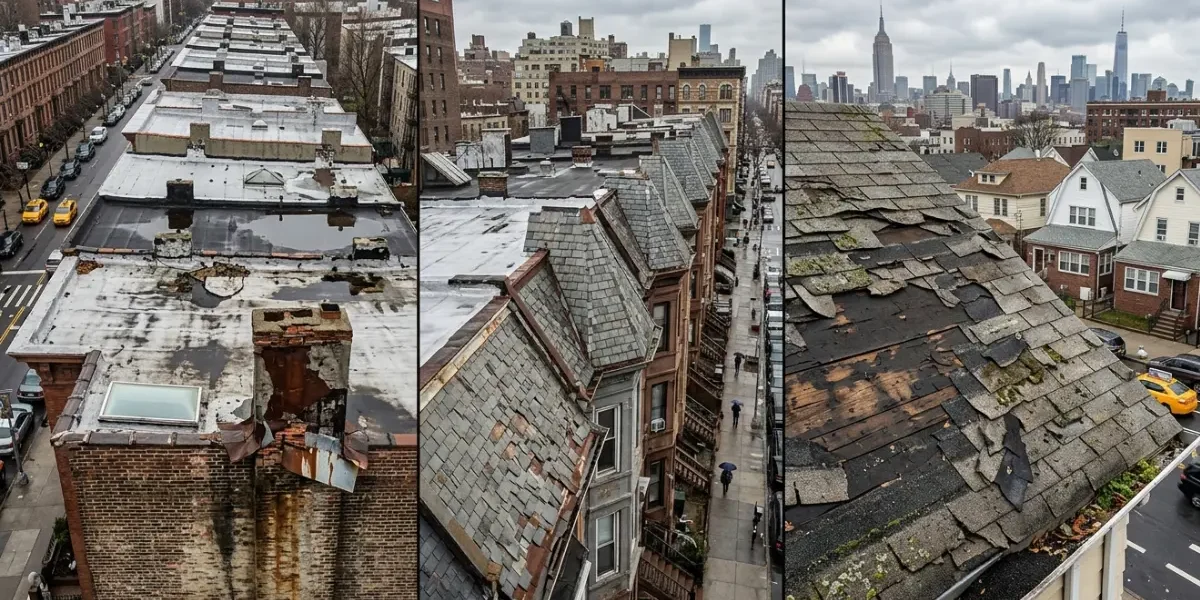
Roof problems in New York City often develop faster than homeowners expect. Between winter snow, summer heat, coastal moisture, and sudden storms, roofing systems across the five boroughs deal with year round stress.
Homes in Brooklyn, Queens, Manhattan, The Bronx, and Staten Island all face different roofing challenges. Brownstones in older neighborhoods may struggle with aging flat roofs. Detached homes in outer boroughs often show shingle wear from heavy wind exposure. Coastal properties can experience moisture damage much earlier than expected.
If you notice early signs of roof damage, acting at the right time can help avoid interior water issues, insulation damage, and structural repairs.
Here are the most common signs you need a new roof in NYC.
1. Your Roof Has Reached Its Expected Lifespan
Roof age is often the first reason homeowners begin considering complete roof installation.
Across New York City, most residential roofs include:
| Roof Type | Common in NYC Boroughs | Typical Lifespan |
|---|---|---|
| Asphalt shingle roofs | Queens, Staten Island, The Bronx | 20 to 30 years |
| Flat roofing systems | Brooklyn, Manhattan | 15 to 25 years |
| Slate roofs | Older Manhattan and Brooklyn homes | 75 years or more |
| Tile roofs | Limited residential areas | 50 years or more |
Many homes in Park Slope, Bay Ridge, Astoria, Forest Hills, Riverdale, and Todt Hill still have older roofing systems that may already be beyond their expected service life.
If your roof is over 20 years old and showing wear, replacement may be the safer option.
2. Water Stains on Ceilings or Walls After NYC Rainstorms
One of the most common signs of roof damage in New York homes is interior staining.
Look for:
• Brown ceiling spots
• Peeling paint near corners
• Damp drywall
• Bubbling plaster
• Mold smell in upper floors
Heavy rainstorms in Brooklyn Heights, Upper West Side, and Flushing often expose roof weaknesses quickly.
Even small stains can signal:
• membrane failure
• cracked flashing
• shingle breakdown
• blocked roof drainage
By the time water enters your living space, roof damage is often more extensive than it appears.
3. Missing or Curling Shingles After High Winds
Wind damage is common throughout NYC, especially during coastal storms.
Homes in Staten Island and Queens often experience stronger wind exposure due to open residential layouts and waterfront conditions.
Check for:
• lifted shingles
• curled edges
• cracked tabs
• exposed underlayment
• shingles found in your yard
These are clear signs you need a new roof when damage appears across multiple sections.
4. Ponding Water on Flat Roofs
Flat roofing is especially common in Brooklyn brownstones, Manhattan townhomes, and mixed use buildings in The Bronx.
Standing water after rainfall is a major warning sign.
Watch for:
• puddles lasting more than 48 hours
• roof surface bubbling
• soft roof spots
• membrane separation
• interior leaks near top floors
Ponding water can weaken roofing membranes and increase structural load.
In neighborhoods like Williamsburg, Bushwick, Harlem, and Long Island City, flat roof drainage issues are a common reason for complete roof installation.
5. Granules in Gutters and Downspouts
Asphalt shingles naturally lose granules over time, but heavy buildup in gutters can signal roof failure.
This is especially common after harsh winters in The Bronx and Queens.
Check for:
• black sand like particles
• clogged gutters
• uneven shingle color
• bald patches on roof surfaces
Granule loss reduces weather resistance and speeds up deterioration.
6. Sagging Rooflines on Older NYC Homes
Many older homes in Brooklyn, Manhattan, and The Bronx have aging structural components beneath the roof.
A sagging roofline may indicate:
• water damaged decking
• weakened rafters
• long term leaks
• structural settling
Stand across the street and inspect your roof profile.
If the roofline dips or looks uneven, professional inspection should happen immediately.
7. Roof Leaks Around Chimneys and Skylights
Older homes across neighborhoods like Park Slope, Cobble Hill, and Riverdale often have aging chimney flashing.
Common leak areas include:
• chimney bases
• skylight edges
• roof vents
• plumbing penetrations
Repeated repairs in these areas may mean the overall roof system is failing.
8. Rising Heating and Cooling Bills
NYC weather puts pressure on home insulation.
A damaged roof can allow:
• winter heat escape
• summer heat entry
• attic moisture buildup
• reduced insulation performance
If utility costs are increasing without HVAC issues, your roof may be contributing to energy loss.
Borough Specific Roofing Challenges
Brooklyn Roofing Issues
Common concerns:
• flat roof membrane wear
• brownstone drainage issues
• storm related leaks
• aging rowhouse roofing systems
Popular neighborhoods:
• Park Slope
• Williamsburg
• Bay Ridge
• Bushwick
• Bedford Stuyvesant
Queens Roofing Issues
Common concerns:
• asphalt shingle aging
• wind damage
• gutter overflow
• attic ventilation problems
Popular neighborhoods:
• Astoria
• Flushing
• Forest Hills
• Bayside
• Jamaica
Manhattan Roofing Issues
Common concerns:
• flat roof ponding
• landmark property restrictions
• aging slate roofs
• flashing failures
Popular neighborhoods:
• Upper East Side
• Upper West Side
• Harlem
• Chelsea
• Greenwich Village
The Bronx Roofing Issues
Common concerns:
• ice dam damage
• older roof structures
• granule loss
• moisture intrusion
Popular neighborhoods:
• Riverdale
• Pelham Bay
• Fordham
• Morris Park
Staten Island Roofing Issues
Common concerns:
• coastal moisture exposure
• wind lifted shingles
• salt air wear
• storm damage
Popular neighborhoods:
• Tottenville
• Great Kills
• Todt Hill
• New Dorp
When Roof Repair Is No Longer Enough
Sometimes repairs only delay larger problems.
You may need complete roof installation if:
• leaks keep returning
• roof is over 20 years old
• damage appears in multiple areas
• shingles are failing widely
• roof decking feels soft
• structural sagging is visible
A full replacement often saves money compared to repeated emergency repairs.
FAQs
What are the first signs of roof damage in NYC homes?
Water stains, missing shingles, ponding water, and rising utility bills are common early warning signs.
How often should New York homeowners inspect their roofs?
At least twice a year, especially after winter and after major storms.
Do flat roofs in Brooklyn need replacement sooner?
Flat roofs often wear faster if drainage issues are present or maintenance is delayed.
Can NYC storms shorten roof lifespan?
Yes. Wind, snow, ice, and heavy rain can all reduce roofing life.
Which borough sees the most roof storm damage?
Coastal parts of Staten Island and Queens often experience significant wind and moisture related roof damage.


