
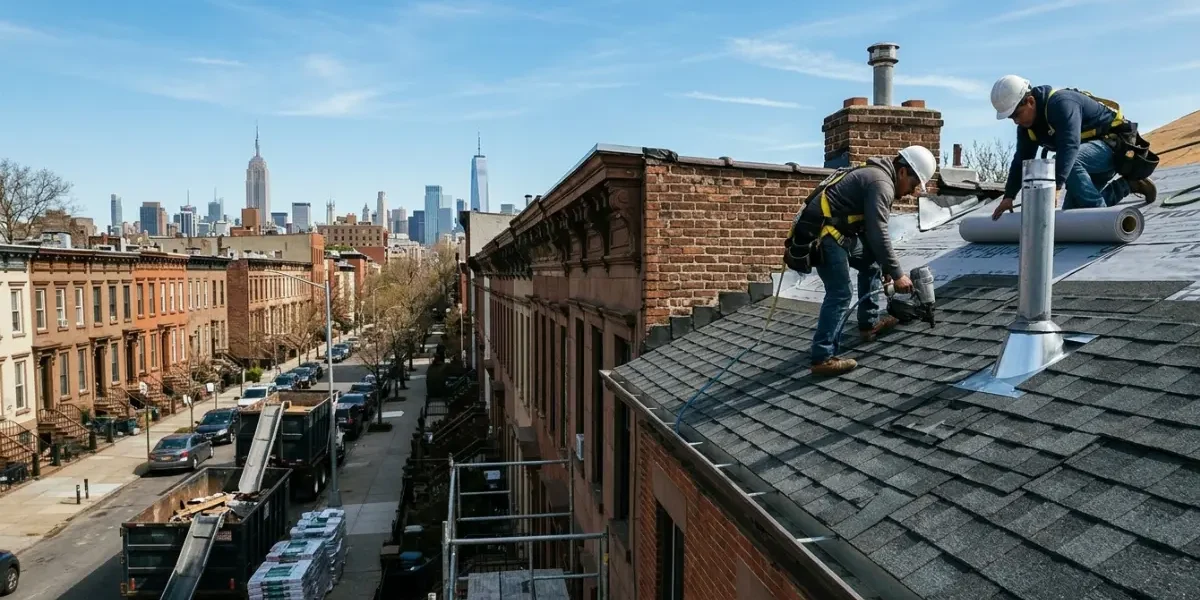
Replacing or installing a new roof is one of the most significant investments a property owner can make in New York City. Whether it’s a single-family home, a small multifamily building, or a commercial property, understanding the roof installation process can save time, money, and stress. From initial inspection to final cleanup, every step matters. This guide provides a comprehensive, step-by-step overview tailored specifically for NYC homeowners and building managers, with insights on materials, permits, costs, and borough-specific considerations.
Roof installation in NYC comes with unique challenges:
- Dense urban environment: Limited space for staging materials and equipment.
- Local regulations: DOB permits, Local Law 11 inspections, and building codes.
- Weather considerations: NYC winters, ice dams, and summer storms.
- Varied property types: Pitched residential homes vs flat multi-unit roofs.
This article covers everything you need to know, including material selection, preparation, installation, post-installation maintenance, costs, timelines, and borough-specific tips.
Step 1 – Initial Roof Assessment and Inspection
Before any work begins, a professional inspection is essential:
- Structural Evaluation: Check decking, supports, joists, and roof framing.
- Leak Assessment: Identify water damage, mold, and weak areas.
- Slope and Drainage Analysis: Determine whether flat or pitched roofing is best.
- Material Recommendations: Match the roof type with asphalt shingles, metal, slate, EPDM rubber, TPO, or modified bitumen.
- Estimate Preparation: Detailed quote covering labor, materials, permits, and disposal.
NYC Tip: Multi-story buildings may require additional inspections under Local Law 11, ensuring compliance with structural safety regulations.
Step 2 – Permits and Paperwork
NYC requires roofing permits for nearly all projects:
- Construction Permit: Submit detailed plans including materials, methods, and structural info.
- DOB Compliance: Follow BC 1503, NYC’s building code section on roof installation and weatherproofing.
- Notifications: Inform neighbors if scaffolding, cranes, or street closures are necessary.
- Insurance Verification: Contractors should have liability insurance and workers’ compensation.
Important: Skipping permits can result in fines, insurance disputes, or legal complications.
Step 3 – Roof Material Selection
Choosing the right roofing material affects cost, durability, and energy efficiency:
| Material | Lifespan | Pros | Cons | Best For NYC |
|---|---|---|---|---|
| Asphalt Shingles | 20–30 yrs | Affordable, easy to install | Susceptible to wind damage | Residential homes, pitched roofs |
| Metal Roofing | 40–70 yrs | Durable, reflective, low maintenance | Higher cost | Commercial, multifamily, historic homes |
| Slate | 50–100 yrs | Extremely long-lasting, aesthetic | Heavy, expensive | Premium homes, landmarks |
| EPDM Rubber | 20–30 yrs | Flat roof compatible, easy maintenance | Puncture-prone | Flat roofs, multifamily, commercial |
| TPO | 25–35 yrs | Energy-efficient, lightweight | Can shrink or wrinkle | Flat commercial roofs |
| Modified Bitumen | 20–30 yrs | Flexible, durable | Prone to UV damage | Low-slope commercial roofs |
NYC Insight: Flat roofs dominate Manhattan and Bronx row buildings; pitched roofs are common in Brooklyn and Staten Island. Commercial buildings often prefer EPDM, TPO, or modified bitumen for cost-effectiveness and durability.
Step 4 – Pre-Installation Preparation
Preparation is critical for a smooth installation:
- Site Protection: Cover landscaping, sidewalks, and nearby structures with tarps.
- Safety Protocols: Use scaffolding, guardrails, and fall protection for high-rise or steep roofs.
- Material Delivery: Plan logistics for NYC streets; crane or lift rentals may be needed.
- Temporary Tarping: Protect interiors during tear-off or adverse weather.
- Crew Planning: Allocate specialized teams for roofing, flashing, insulation, and cleanup.
Tip: Preparation ensures faster installation and reduces risk of accidents or damage.
Step 5 – Tear-Off of Old Roof
Removing old roofing is labor-intensive but critical:
- Shingles and Layers: Carefully remove old shingles, tiles, or membrane layers.
- Deck Inspection: Check for water damage, rot, and structural weakness.
- Hazard Handling: Asbestos or lead shingles require certified removal.
- Waste Management: Comply with NYC disposal regulations.
Timeline: Residential roofs: 1–3 days. Multifamily or commercial: 1–2 weeks.
Step 6 – Installation Process
The actual installation follows these steps:
- Underlayment: Waterproof barrier applied to prevent leaks.
- Flashing: Metal flashing around chimneys, vents, skylights, edges.
- Roof Material Installation: Shingles, metal panels, slate, or rubber sheets are installed.
- Ventilation & Insulation: Prevents ice dams, improves energy efficiency.
- Ridge Caps & Sealants: Ensure water resistance and durability.
Pro Tip: NYC winters demand ice and water shields for flat and pitched roofs to prevent ice damming and leaks.
Step 7 – Multifamily and Commercial Roofing Nuances
- Access and Logistics: Lifts, cranes, and scaffolding may be required for multi-unit roofs.
- Tenant Coordination: Minimize disruption for occupied buildings.
- High-Rise Safety: Additional guardrails, tie-offs, and crew supervision required.
- Insurance: Coverage for property, workers, and liability.
- Permit Differences: Multi-unit buildings often need additional inspections and DOB approvals.
Step 8 – Finishing and Cleanup
- Debris Removal: All old roofing materials, nails, and scraps cleaned up.
- Final Inspection: Ensure proper installation and NYC code compliance.
- Warranties: Contractors provide documentation for materials and labor.
Step 9 – Post-Installation Maintenance
To extend roof life:
- Seasonal Inspections: Especially after storms or snowfall.
- Gutter Maintenance: Prevent water pooling.
- Visual Checks: Look for missing shingles, cracks, or leaks.
- Repair Small Issues: Prompt repairs prevent major damage.
Step 10 – Cost Breakdown
| Property Type | Average Cost | Factors Affecting Price |
|---|---|---|
| Residential | $7,000 – $30,000 | Size, material, labor, permits |
| Small Multifamily | $25,000 – $75,000 | Multiple units, access, permits |
| Commercial | $50,000 – $200,000+ | Flat roofs, insulation, permits, crane usage |
Factors: NYC labor rates, permit costs, building access, weather delays.
Step 11 – Timeline Expectations
- Residential: 1–2 weeks.
- Multifamily: 2–4 weeks.
- Commercial: 3–8 weeks.
Influencing Factors: Weather, material availability, crew size, inspections, permit approvals.
Step 12 – Borough-Specific Considerations
- Manhattan: High-rise constraints, DOB inspections, flat roofs.
- Brooklyn: Mixed roof types, historic preservation.
- Queens: Residential/commercial mix, wind exposure near water.
- Bronx: Flat roofs dominate, row buildings, snow load considerations.
- Staten Island: Pitched roofs common, snow and rain drainage.
Step 13 – Common Challenges
- Space constraints in urban areas.
- Weather and wind delays.
- Noise restrictions in residential zones.
- Material delivery and storage.
- Coordination with other trades (plumbing, HVAC).
FAQs
How long does a roof replacement take in NYC?
Residential: 1–2 weeks; multifamily: 2–4 weeks; commercial: 3–8 weeks.
Are permits required?
Yes, NYC requires permits in all boroughs.
What roof material lasts longest?
Slate and metal roofs: 50–100 years; asphalt shingles: 20–30 years.
Can residents stay during installation?
Yes, but expect noise and temporary disruption.


