

Replacing your roof is one of the most significant investments a homeowner can make. The roof is the primary protection for your home, shielding it from rain, wind, snow, and other environmental factors. Understanding the cost of roof replacement is crucial because it allows you to budget effectively, choose the right materials, and hire professional roofing services with confidence. The total roofing cost can vary widely depending on multiple factors such as materials, roof size, labor costs, and the complexity of the project. Knowing the average roof replace cost in your area, and how different roofing materials influence the price, can help you make informed decisions and prevent unexpected expenses during the process.
What Determines the Cost of a New Roof
When homeowners start planning a new roof, one of the first questions they ask is how much a new roof will cost. A new roof price is not just a simple number. It involves several components, including the cost of materials, installation fees, labor charges, and any additional costs like permits or roof inspections.

Factors That Influence Pricing
On average, roof replacement cost can fluctuate based on:
-
Location and local labor rates
-
The condition of the current roof
-
The type and quality of roofing materials selected
While asphalt shingles remain one of the most popular choices for homeowners due to affordability and durability, other materials such as metal, slate, and clay tiles offer longevity and aesthetic appeal but come with higher roofing replacement costs.
Why Roof Replacement Is a Valuable Investment
Roof replacement cost is not merely a financial consideration. Investing in a new roof enhances your home’s value, improves energy efficiency, and protects the structural integrity of your property. Understanding how much does a roof cost per square foot helps you estimate the overall investment required. A typical new roof cost for a standard-sized home can range from a few thousand dollars to tens of thousands, depending on the materials and labor involved. By breaking down the roofing cost and exploring the factors that influence it, homeowners can make strategic decisions that balance quality and budget.
What This Roofing Cost Guide Will Cover
In this guide, we will cover every aspect of roof replacement.
Topics Included
-
The average cost of a roof replacement
-
Factors that affect pricing
-
Different roofing materials and their cost differences
-
Roof pricing tiers and cost-per-square-foot breakdowns
-
How to choose the right roofing contractor
-
Financing options for homeowners in New York
-
When to repair vs replace a roof
Whether you are considering a full roof replacement or evaluating whether to repair or replace your current roof, this comprehensive guide will answer all your questions.
By the end of this article, you will have a clear understanding of replacement roofing cost, new roof cost, and the key considerations for planning your roofing project. Understanding roofing costs allows homeowners to make informed choices, ensuring their investment not only protects their home but also enhances its curb appeal and long-term value.
Roof Replacement Cost
Understanding roof replacement cost is essential for every homeowner preparing to invest in a new roof. The cost of a new roof depends on several factors, ranging from the type of materials chosen to the size and complexity of your roof. Knowing the average roof replacement cost can help you plan your budget and avoid surprises during the project.
What Contributes to the Cost
The average roof replacement cost is not a fixed number. It varies based on the roofing material, labor rates, and the structural condition of the home. Asphalt shingles are the most common and affordable option, often costing between twenty and fifty dollars per square foot, including installation. Metal roofing and synthetic slate offer more durability and longevity, but their roofing cost per square feet can be significantly higher. Homeowners must also consider the cost of underlayment, flashing, vents, and ridge caps, which are essential components to ensure the roof’s performance and lifespan.
Labor and Installation Costs
In addition to material costs, labor significantly influences the roofing replacement cost. Roof installation cost varies depending on the complexity of the roof, the pitch, and the number of stories. Steeper roofs require additional safety measures and more labor hours, increasing the overall roofing cost. Even minor repairs or adjustments during installation can impact the total price. A professional roofing contractor can provide a roof replacement estimate that breaks down these costs, giving homeowners a clear picture of the investment required.
Benefits of Roof Replacement
Homeowners should also consider the benefits of replacing an old roof compared to the costs. A roof replacement can improve energy efficiency, enhance curb appeal, and prevent costly structural damage from leaks or decay. Understanding how much a new roof will cost allows you to compare different materials, weigh long-term benefits, and make a decision that balances quality and budget. Planning ahead and working with experienced roofing services can help ensure that the project proceeds smoothly, and that the final roof meets both aesthetic and functional expectations.
Timing and Regional Factors
Roof replacement cost can also be influenced by timing. Scheduling a roof replacement during peak season may increase labor costs, while off-season projects might allow homeowners to negotiate lower pricing. Additionally, regional factors such as New York weather conditions and local labor rates will impact roofing cost per square foot. By analyzing all these variables, homeowners can get a realistic estimate of their replacement roofing cost and make informed choices for their home improvement project.
The Average Cost of a Roof Replacement
Replacing a roof is a significant financial investment, and understanding the average roof replacement cost is essential for homeowners planning this project. The typical cost to replace a roof varies depending on several factors including the size of your home, the materials selected, labor charges, and any additional services such as old roof removal or structural repairs. On average, homeowners can expect the new roof cost to range widely, from a few thousand dollars for small, simple roofs to over twenty thousand dollars for larger or more complex roofing projects.

Average Cost by Home Size
The size of your roof plays a critical role in determining the roofing replacement cost. Standard homes with a roof area of around 1,500 to 2,000 square feet generally experience average roof replacement costs in the range of ten thousand to fifteen thousand dollars when using mid-range materials like asphalt shingles. Larger homes with roof areas exceeding 3,000 square feet will naturally incur higher costs, sometimes reaching twenty thousand to thirty thousand dollars or more, depending on the roofing material and labor requirements. Calculating the average cost to replace a roof per square foot can help homeowners estimate their total expenditure more accurately.
Roof Replacement Cost by Size
| Roof Size (sq ft) | Average Asphalt Shingle Cost | Average Metal Roof Cost | Average Slate Roof Cost |
|---|---|---|---|
| <1,500 | $8,000–$12,000 | $12,000–$18,000 | $20,000–$30,000 |
| 1,500–2,500 | $12,000–$20,000 | $18,000–$30,000 | $30,000–$50,000 |
| 2,500–4,000 | $20,000–$30,000 | $30,000–$45,000 | $50,000–$70,000 |
| 4,000+ | $30,000+ | $45,000+ | $70,000+ |
Average Roof Replacement Cost by Material
The roofing material selected has one of the largest impacts on total cost. Asphalt shingles are generally the most affordable option, offering good durability and a lifespan of twenty to thirty years. Their replacement roofing cost averages between twenty to fifty dollars per square foot, including installation. Metal roofing is more durable and can last up to fifty years, but the cost per square foot can be double or triple that of asphalt. Slate and clay tile roofs are the most expensive but provide unmatched longevity and aesthetic appeal, with average roof cost ranging from one hundred to two hundred dollars per square foot depending on quality and installation complexity.
Asphalt Shingles
Asphalt shingles are the most common choice in New York due to affordability and ease of installation. They are ideal for homeowners seeking a balance between cost and durability. Average cost of roof replacement using asphalt shingles is approximately twenty-five to forty dollars per square foot.
Metal Roofing
Metal roofing is durable and energy-efficient, often lasting forty to fifty years. The average roof replacement cost with metal shingles or panels is between seventy and one hundred twenty dollars per square foot.
Slate and Clay Tiles
Slate and clay tile roofs provide premium durability and aesthetics. The typical new roof cost for these materials ranges from one hundred to two hundred dollars per square foot. While upfront costs are high, the lifespan and minimal maintenance make these materials a long-term investment.
Roof Replacement Cost by Material
| Material | Cost per Square Foot | Lifespan (Years) | Average Replacement Cost | Benefits |
|---|---|---|---|---|
| Asphalt Shingles | $3–$5 | 20–30 | $10,000–$20,000 | Affordable, easy to install |
| Clay Tiles | $10–$18 | 50+ | $30,000–$50,000 | Fire-resistant, durable, aesthetic |
| Metal | $7–$15 | 40–70 | $20,000–$40,000 | Durable, energy-efficient |
| Wood Shingles | $6–$9 | 25–40 | $15,000–$35,000 | Natural look, traditional style |
| Slate | $15–$30 | 75–100 | $50,000+ | Extremely durable, premium look |
| Synthetic | $6–$12 | 30–50 | $20,000–$35,000 | Lightweight, low maintenance |
Other Considerations Affecting Average Cost
Homeowners should also consider additional factors when estimating roofing replacement costs. Removing old roofing adds labor and disposal costs. Roof complexity, such as multiple dormers or a steep pitch, increases labor charges. Permits, inspections, and structural reinforcements may add to the total investment. All these factors combined can raise or lower the average roof replacement cost significantly.
Understanding the average roof replacement cost provides homeowners with realistic expectations. It allows for accurate budgeting and informed decision-making, ensuring the investment protects the home, enhances curb appeal, and meets long-term needs.
Factors That Affect the Cost of a New Roof in New York
The cost of a new roof in New York can vary widely depending on several factors. Therefore, understanding these elements is essential. By gaining clarity on the variables that influence pricing, homeowners can plan their budget more effectively. This also allows them to make informed decisions regarding roofing materials, labor expenses, and any additional services required.The total roofing cost is influenced by the type of materials, the size and pitch of the roof, labor requirements, and any additional repairs needed during installation.
Roofing Material
The choice of roofing material is one of the most significant factors affecting roof replacement cost. Asphalt shingles are widely used due to affordability, while metal, slate, clay, or synthetic materials provide longer lifespans but come with higher costs.
- Asphalt Shingles: Cost-effective and easy to install, asphalt shingles typically range from twenty-five to fifty dollars per square foot.
- Metal Roofing: Durable and energy-efficient, metal roofing averages seventy to one hundred twenty dollars per square foot.
- Slate and Clay Tiles: Premium materials offering longevity and aesthetic appeal, these can cost between one hundred and two hundred dollars per square foot.
Size of Your Roof
The total area of your roof directly impacts the new roof cost. Larger roofs require more materials and longer labor hours, increasing replacement roofing cost. Small homes with a roof area of 1,500 square feet may see average roof replacement costs around ten thousand to fifteen thousand dollars, whereas large homes with over 3,000 square feet can exceed twenty thousand dollars.
The Pitch of Your Roof
Roof pitch, or the slope of the roof, affects labor complexity and material handling. Steeper roofs require additional safety measures and scaffolding, increasing roofing installation cost. Low-pitched roofs are generally easier to work on and may reduce labor expenses.
The Shape of Your Roof
Complex roof designs with multiple dormers, valleys, or hips require extra labor and precision, increasing both material waste and roofing cost per square foot. Simple gable roofs are less labor-intensive and typically cost less to replace.
Removing Old Roofing vs. Roofing Over
Deciding whether to remove old roofing or install new layers over existing materials affects total roofing cost. Full removal increases labor and disposal fees but ensures a longer-lasting roof. Overlaying a new roof on top of old shingles may save money upfront but can reduce the lifespan of the new roof and affect warranty coverage.
Labor Costs
Labor charges vary depending on roof complexity, location, and the experience of the roofing contractor. In New York, labor costs are higher than in rural areas due to local wage standards. Complex installations, multiple roof levels, or steep pitches will increase overall roofing costs.
Labor Cost Factors Table
| Factor | Impact on Cost | Notes |
|---|---|---|
| Roof Pitch | High | Steep roofs require more safety measures and labor |
| Roof Complexity | High | Multiple dormers, valleys, or hips increase labor hours |
| Location | Medium | Urban areas have higher labor rates |
| Time of Year | Medium | Off-peak seasons can reduce labor costs |
| Roof Removal | High | Full tear-off adds labor and disposal fees |
New York Roof Replacement Pricing Tiers
When planning a roof replacement in New York, understanding the pricing tiers helps homeowners align their budget with the quality and type of roofing materials they desire. Roof replacement costs vary widely, ranging from low-budget solutions to premium, top-tier installations. Choosing the right tier ensures you get a durable roof without overspending.
Replacing Your Roof on a Low Budget
For homeowners looking to minimize expenses, low-budget roof replacement focuses on affordability while maintaining basic protection.
- Materials: Asphalt shingles are the most common choice for budget-friendly roofs. They are durable, cost-effective, and easy to install.
- Average Cost: A typical new roof using asphalt shingles on a low-budget tier ranges from ten thousand to fifteen thousand dollars for a standard-sized home.
- Labor Considerations: Low-budget roofing often includes straightforward installation with minimal complexity, reducing labor costs.
Even on a low budget, it is essential to ensure proper roof installation. Cheap materials or poor workmanship can lead to leaks and early roof failure, increasing long-term expenses. Working with reputable roofing services ensures that even budget-friendly roofs provide adequate protection.
Mid-Range Roof Replacement
Mid-range roof replacement offers a balance between cost, quality, and aesthetics. This tier allows homeowners to choose materials with longer lifespans and better durability.
- Materials: Options include upgraded asphalt shingles, synthetic slate, or basic metal roofing.
- Average Cost: Mid-range roofing typically costs between fifteen thousand and thirty thousand dollars for standard homes, depending on size and complexity.
- Labor Considerations: Installation may involve moderate complexity, such as handling multiple roof slopes or small dormers, which slightly increases labor costs.
Mid-range roofs are ideal for homeowners who want reliable durability without investing in premium materials. They also provide flexibility for aesthetic upgrades like ridge caps, vent enhancements, or architectural shingles.
Top-Tier Roof Replacement
Top-tier roof replacement focuses on premium materials, longevity, and advanced design features. This tier is suitable for homeowners seeking long-term investment and superior home protection.
- Materials: Slate, clay tiles, high-end metal panels, or custom synthetic shingles.
- Average Cost: Costs for top-tier roofs can range from thirty thousand to over fifty thousand dollars for standard-sized homes, depending on materials and installation complexity.
- Labor Considerations: Premium roofing requires specialized installation skills, safety equipment, and detailed craftsmanship, increasing labor costs.
Top-tier roofing not only enhances the home’s appearance but also provides excellent durability, often lasting fifty years or more. This investment can significantly increase property value and reduce maintenance needs over the long term.
Choosing the Right Tier
Deciding on a roof replacement tier depends on your budget, desired lifespan, and aesthetic preferences. Low-budget options offer basic protection, mid-range solutions balance durability and cost, and top-tier roofs provide longevity and premium aesthetics. Understanding these tiers helps homeowners plan for roofing costs and ensures the new roof meets both functional and visual expectations.
What Should You Look For in a Contractor When Buying a New Roof?
Hiring the right contractor is a critical step in a successful roof replacement project. The contractor you choose will directly impact the quality of work, the lifespan of your new roof, and ultimately the total roof replacement cost. Choosing a reliable roofing contractor ensures proper installation, reduces the risk of future leaks, and protects your investment.

Verify Licensing and Insurance
Before hiring any roofing services, confirm that the contractor is properly licensed and insured.
- Licensing: Licensed contractors meet state regulations and building code requirements, ensuring your roof is installed correctly.
- Insurance: General liability and workers’ compensation insurance protect homeowners from accidents or property damage during the roofing project.
Check Experience and Reputation
Experience matters when it comes to roof replacement. Contractors with a solid track record have handled various roof types and understand how to manage complications.
- Years in Business: A company operating for several years often demonstrates reliability and consistency.
- References and Reviews: Look for customer reviews, testimonials, and before-and-after project photos. A reputable contractor will provide references to validate their quality of work.
Evaluate Roofing Services Offered
A good contractor provides comprehensive roofing services, from inspections and estimates to full installation.
- Full-Service Roofing: Ensure the contractor handles material procurement, old roof removal, installation, and cleanup.
- Specialized Services: If your project involves slate, tile, or metal roofing, choose a contractor experienced with those materials to ensure quality workmanship.
Compare Roof Replacement Estimates
Request detailed roof replacement estimates from multiple contractors. Comparing pricing helps you identify fair costs and avoid overpaying.
- Itemized Estimates: Look for a breakdown of materials, labor, permits, and any additional costs.
- Transparent Pricing: Avoid contractors who provide vague or verbal estimates without documentation.
Warranty and Aftercare
A reliable contractor should offer warranties on both materials and labor.
- Material Warranty: Covers defects in shingles, tiles, or metal panels for a specified period.
- Workmanship Warranty: Ensures proper installation and protects against premature roof failure.
Communication and Professionalism
Effective communication is essential during a roof replacement project. Contractors should be responsive, transparent, and professional, keeping you informed throughout the process.
- Project Timeline: Ensure the contractor provides a clear timeline for removal, installation, and completion.
- Problem Resolution: A professional contractor addresses concerns promptly and provides solutions efficiently.
Choosing the right contractor may take time, but it is an investment in the longevity and performance of your new roof. A qualified roofing contractor ensures that your roof replacement project is completed safely, efficiently, and within budget, providing peace of mind for years to come.
How To Save on Roof Replacement Costs
Replacing a roof is a major investment, but there are several strategies homeowners can use to reduce overall roofing costs without compromising quality. Understanding these cost-saving techniques helps balance budget constraints while ensuring a durable, long-lasting roof.
Explore Homeowners Insurance Claim Options
Homeowners insurance can sometimes cover part of the roof replacement cost if damage is caused by storms, hail, or other covered perils.
- Check Your Policy: Review your insurance coverage to understand what types of roof damage are covered.
- File a Claim: Work with your insurance provider and roofing contractor to document damage and submit a claim.
- Maximize Benefits: Using insurance to offset part of the cost can significantly reduce out-of-pocket expenses.
Negotiate For a Lower Cost
Many roofing contractors are willing to discuss pricing, especially for full roof replacements.
- Get Multiple Estimates: Compare at least three roofing estimates to identify fair market pricing.
- Ask About Discounts: Contractors may offer seasonal discounts, bulk pricing for large projects, or promotions on certain materials.
- Flexible Payment Options: Some roofing companies provide financing plans that reduce upfront costs.
Consider Material Alternatives
Choosing the right materials can also impact roof replacement costs.
- Affordable Options: Asphalt shingles are the most cost-effective solution while still providing durability.
- Synthetic Alternatives: Synthetic slate or composite materials may provide a similar aesthetic to premium materials at a lower price.
- Bulk Purchase: Buying roofing materials in bulk through the contractor can sometimes reduce material costs.
Schedule During Off-Peak Seasons
Roof replacement projects completed during slower periods may be more affordable.
- Weather Considerations: Early spring or late fall projects can offer lower labor costs compared to peak summer months.
- Contractor Availability: Less demand can increase your leverage for better pricing and flexible scheduling.
Maintain Your Existing Roof Until Replacement
Proper maintenance can extend the life of your current roof, delaying full replacement.
- Minor Repairs: Fix small leaks or damaged shingles promptly to prevent additional damage.
- Regular Inspections: Conduct periodic inspections to catch issues early, reducing emergency roofing costs.
By exploring insurance options, negotiating with contractors, considering material alternatives, scheduling strategically, and maintaining your current roof, homeowners can effectively reduce roof replacement costs. Applying these strategies ensures that a new roof is both affordable and high quality.
Should You Repair or Replace Your Roof?
Deciding whether to repair or replace your roof is an important choice that affects both your budget and the long-term protection of your home. Making the right decision requires careful evaluation of the roof’s condition, age, and the extent of damage. Understanding the signs for repair versus replacement helps homeowners avoid unnecessary costs while ensuring a secure, durable roof.
Signs You Should Repair Your Roof
Roof repairs are typically more affordable than full replacements and may be sufficient for minor damage or isolated issues.
- Localized Leaks: Small leaks or water stains often indicate that specific areas of the roof need attention rather than a full replacement.
- Damaged Shingles or Tiles: Replacing a few broken or missing shingles or tiles can restore roof functionality at a fraction of replacement costs.
- Minor Flashing Issues: Loose or damaged flashing around chimneys, vents, or skylights can usually be repaired without a full roof replacement.
Repairing minor issues promptly prevents further damage and may extend the life of your roof by several years. This can save homeowners significant roofing replacement cost in the short term.
Signs You Should Replace Your Roof
Full roof replacement is necessary when damage is extensive or the roof has reached the end of its useful lifespan.
- Widespread Shingle Damage: Curling, cracking, or missing shingles across multiple areas indicate that repair is no longer sufficient.
- Frequent Leaks: Persistent leaks despite repeated repairs suggest structural problems requiring replacement.
- Age of Roof: Most asphalt shingles last twenty to thirty years, metal roofs forty to fifty years, and slate or tile roofs fifty years or more. When a roof reaches its expected lifespan, replacement is often more cost-effective than repeated repairs.
- Structural Damage: Sagging roof decks, rot, or compromised support structures necessitate a full replacement to ensure safety.
Making the Decision
When deciding between repair and replacement, consider:
- Long-Term Costs: Frequent repairs may add up, making replacement a better investment.
- Home Value Impact: A new roof can increase property value and curb appeal, whereas an aging, damaged roof may detract from it.
- Material Lifespan: Evaluate the remaining lifespan of your current materials to determine whether replacement is justified.
Consulting a professional roofing contractor can provide a detailed roof replacement estimate and help assess whether repair or replacement is the most cost-effective choice. Proper evaluation ensures homeowners invest wisely in a roof that protects the home and maintains its value.
Signs to Repair vs Replace Table
| Signs | Repair | Replace |
|---|---|---|
| Localized leaks | ✅ | ❌ |
| Minor shingle damage | ✅ | ❌ |
| Persistent leaks | ❌ | ✅ |
| Roof age exceeds lifespan | ❌ | ✅ |
| Structural damage (rot, sagging) | ❌ | ✅ |
3 Ways to Finance a New Roof in New York
Roof replacement can be a significant financial commitment, but homeowners have several financing options to make the investment manageable. Understanding available financing methods allows you to replace your roof without straining your budget while still ensuring quality roofing services and materials.
Home Equity Loan
A home equity loan allows you to borrow against the equity in your home.
- Benefits: Often offers lower interest rates compared to personal loans or credit cards. Homeowners can deduct interest payments in certain cases.
- Considerations: Repayment is required over a fixed period, typically five to fifteen years. Failing to repay may risk your home as collateral.
- Roof Replacement Cost Coverage: Home equity loans are ideal for covering mid-range or top-tier roof replacement costs, including premium materials and labor.
Insurance Claim
Homeowners insurance can cover part of the roof replacement cost if damage is caused by covered perils such as storms, hail, or wind.
- Eligibility: Check your policy for coverage related to roof damage and exclusions.
- Claim Process: Document damage with your roofing contractor and submit detailed estimates to your insurance provider.
- Benefits: Reduces out-of-pocket expenses for new roof installation. Using insurance can help finance both labor and materials for extensive roof replacement projects.
Personal Loans
Personal loans are unsecured loans that can be used for home improvement projects, including roof replacement.
- Benefits: Quick access to funds without using home equity. Fixed repayment schedules and interest rates make budgeting easier.
- Considerations: Interest rates may be higher than home equity loans, and loan approval depends on creditworthiness.
- Roof Replacement Cost Coverage: Suitable for covering smaller to mid-range roof replacement costs or supplementing other financing options.
Financing Options Table
| Financing Option | Typical Interest Rate | Advantages | Considerations |
|---|---|---|---|
| Home Equity Loan | 5–8% | Lower interest, potential tax benefits | Uses home as collateral |
| Insurance Claim | N/A | Reduces out-of-pocket cost | Only covers storm/accidental damage |
| Personal Loan | 8–15% | No home equity required | Higher interest, depends on credit score |
Choosing the Right Financing Option
Selecting the best financing method depends on your financial situation, roof replacement cost, and project urgency. Home equity loans are ideal for homeowners with significant equity, insurance claims are best for unexpected damage, and personal loans offer flexibility for those without equity. Combining these options can also provide financial flexibility for larger roofing projects.
Financing a new roof ensures you can invest in durable materials, professional roofing services, and proper installation while managing overall expenses. By understanding your options, you can plan a cost-effective roof replacement without compromising quality or safety.
Other Factors to Consider
When planning a roof replacement, there are several additional factors that can influence the total cost and quality of your new roof. Understanding these elements helps homeowners make informed decisions and avoid unexpected expenses.
Redeck a Roof
Redecking involves replacing the roof’s underlying plywood or decking, which provides the structural support for shingles or other roofing materials.
- When Redecking is Needed: Signs of water damage, rot, or weakened support indicate that redecking is necessary.
- Cost Implications: Redecking adds to the overall roof replacement cost, typically ranging from five to ten dollars per square foot, depending on material and labor.
- Benefits: A solid, newly installed deck ensures proper support for roofing materials, increases the lifespan of your roof, and prevents future structural problems.
Inspection Cost
Roof inspections are essential before replacement to assess damage, structural integrity, and potential complications.
- Professional Inspection: A certified roofing contractor can provide a thorough assessment and detailed roof replacement estimate.
- Cost Considerations: Roof inspection costs vary, usually between one hundred fifty and five hundred dollars, depending on roof size and complexity.
- Importance: Early inspections help identify hidden damage, prevent unexpected roofing costs, and ensure the new roof is installed on a solid foundation.
Permits
Obtaining proper permits is a legal requirement in New York for most roof replacement projects.
- Permit Requirements: Local building codes often require permits for structural changes, material upgrades, or large-scale roof replacement.
- Cost of Permits: Permit costs vary by municipality but typically range from two hundred to one thousand dollars.
- Impact on Project: Ensuring permits are obtained prevents fines, legal issues, and potential delays in the roof replacement process.
Additional Considerations
Other factors that may affect roof replacement cost include:
- Structural Repairs: Repairing sagging rafters, reinforcing trusses, or addressing attic issues increases total costs.
- Debris Removal: Removing old roofing materials and disposing of them properly adds labor and disposal fees.
- Material Upgrades: Adding ice and water barriers, upgraded flashing, or ventilation systems improves durability but increases cost.
Taking these factors into account provides a clearer picture of the total roof replacement cost and ensures homeowners make well-informed decisions. Proper planning prevents budget overruns, ensures compliance with local regulations, and guarantees a roof that will last for decades.
Replacing Your Roof
Replacing a roof involves selecting the right materials, hiring professional roofing services, and following proper installation practices. Different roofing types offer varying lifespans, costs, and maintenance requirements. Understanding each option helps homeowners make informed decisions and manage roof replacement costs effectively.
Aluminum Roof
Aluminum roofing is lightweight, durable, and resistant to corrosion.
- Cost: Typically ranges from seventy to one hundred twenty dollars per square foot, depending on thickness and design.
- Lifespan: Aluminum roofs can last forty to fifty years with minimal maintenance.
- Benefits: Resistant to rust, ideal for coastal regions, and energy-efficient due to reflective properties.
Asphalt Shingles
Asphalt shingles are the most common roofing material due to affordability and ease of installation.
- Cost: Average roof replacement cost for asphalt shingles ranges from twenty-five to fifty dollars per square foot.
- Lifespan: Lasts twenty to thirty years depending on quality and maintenance.
- Benefits: Easy to repair, widely available, and offers a variety of colors and styles.
Metal Roofing Installation
Metal roofing includes panels or shingles made of steel, aluminum, or copper.
- Cost: Installation averages seventy to one hundred fifty dollars per square foot.
- Lifespan: Can last forty to fifty years or more with proper maintenance.
- Benefits: Durable, fire-resistant, and energy-efficient. Ideal for homeowners looking for a long-term roofing solution.
Roof Leaks Repair
Addressing roof leaks is often a precursor to full roof replacement or part of maintenance during installation.
- Cost Consideration: Small leaks typically cost a few hundred dollars to repair, while extensive water damage increases replacement roofing cost.
- Importance: Repairing leaks promptly prevents structural damage and reduces the risk of costly repairs later.
Roof Cleaning and Inspection
Proper cleaning and inspection before installation help ensure the longevity of your new roof.
- Inspection: Identifies weak spots, damaged flashing, or water damage.
- Cleaning: Removes moss, algae, and debris to provide a clean surface for installation.
- Impact on Costs: Though an additional expense, inspection and cleaning reduce long-term maintenance costs and enhance roof durability.
Slate Roof
Slate roofs offer premium aesthetics and extreme durability.
- Cost: Average roof replacement cost ranges from one hundred fifty to two hundred dollars per square foot.
- Lifespan: Can last seventy to one hundred years with proper care.
- Benefits: Fire-resistant, low maintenance, and visually appealing, making it a long-term investment.
Tile Roof Installation
Tile roofs, including clay and concrete tiles, provide a classic look with excellent durability.
- Cost: Typically ranges from one hundred to one hundred fifty dollars per square foot.
- Lifespan: Can last fifty years or more with minimal maintenance.
- Benefits: Resistant to fire, wind, and rot, suitable for high-end homes.
Tin Roof Installation
Tin roofing is lightweight, cost-effective, and easy to install.
- Cost: Average roof replacement cost for tin roofing ranges from forty to eighty dollars per square foot.
- Lifespan: Lasts thirty to fifty years depending on quality.
- Benefits: Quick installation, energy-efficient, and recyclable, making it environmentally friendly.
Selecting the appropriate roofing material, conducting thorough inspections, and hiring professional roofing services ensures a roof replacement that is both durable and cost-effective. Each roofing type has unique advantages, allowing homeowners to choose based on budget, longevity, and aesthetic preferences.
Cost to Replace a Roof by Size
The size of your roof is one of the most significant factors influencing the total roof replacement cost. Larger roofs require more materials, longer labor, and additional equipment, directly impacting the overall roofing cost. Understanding the cost to replace a roof by size helps homeowners plan their budget accurately and avoid surprises during installation.
Small Roofs (Under 1,500 Square Feet)
Small homes typically have roofs under 1,500 square feet.
- Average Roof Replacement Cost: Using asphalt shingles, the average cost ranges from eight thousand to twelve thousand dollars.
- Material Considerations: Small roofs often allow for more straightforward installation, reducing labor costs.
- Benefits: Lower roof replacement cost and easier maintenance over time.
Medium Roofs (1,500 to 2,500 Square Feet)
Medium-sized roofs are common for suburban homes.
- Average Roof Replacement Cost: Mid-range asphalt shingles cost between twelve thousand and twenty thousand dollars. Premium materials like metal or slate may raise costs to thirty thousand dollars or more.
- Labor Implications: Installation complexity increases slightly with size, requiring more time and workers.
- Planning Tip: Accurate measurement of roof area is essential for obtaining precise roofing replacement estimates.
Large Roofs (2,500 to 4,000 Square Feet)
Larger homes often have more complex roof structures and multiple levels.
- Average Roof Replacement Cost: Asphalt shingles range from twenty thousand to thirty thousand dollars. Metal, slate, or tile roofing may reach fifty thousand dollars or more.
- Material and Labor Costs: Larger roofs require more materials, scaffolding, and labor hours, significantly impacting total roofing cost.
- Additional Considerations: Features like multiple dormers, skylights, or steep pitches increase installation complexity and cost.
Extra-Large Roofs (Over 4,000 Square Feet)
Homes with extra-large roofs require careful planning and budgeting.
- Average Roof Replacement Cost: Roof replacement costs can exceed fifty thousand dollars for high-end materials such as slate, clay tiles, or metal panels.
- Installation Challenges: Extra-large roofs often require specialized equipment and additional crew members, raising labor costs.
- Strategic Planning: Breaking the project into phases or combining material types may help manage expenses effectively.
Roof Replacement Costs by Material
The type of roofing material is one of the most significant factors influencing roof replacement cost. Each material has a different price per square foot, lifespan, and maintenance requirement. Understanding these differences helps homeowners make informed decisions that balance durability, aesthetics, and budget.
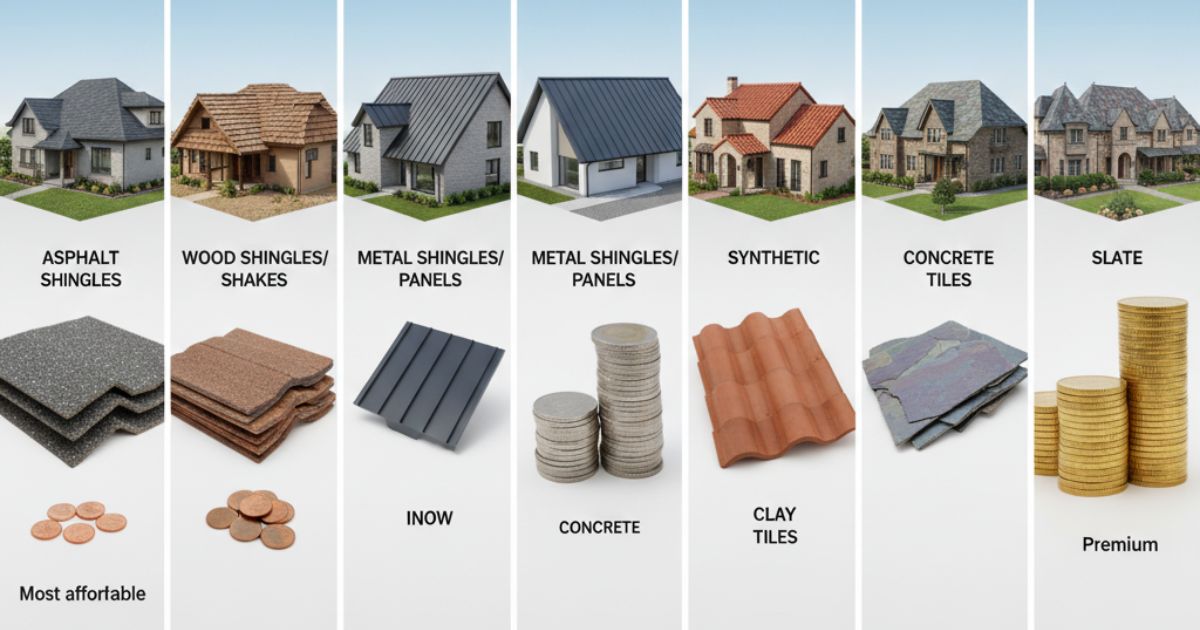
Asphalt Shingles
Asphalt shingles are the most commonly used roofing material due to their affordability and ease of installation.
- Cost per Square Foot: $3 to $5
- Average Roof Replacement Cost: $10,000 to $20,000 for a standard-sized home
- Lifespan: 20 to 30 years
- Benefits: Easy to install and repair, widely available in various colors and styles, cost-effective for most homeowners
Clay Tiles
Clay tiles are known for their classic look and long-lasting durability.
- Cost per Square Foot: $10 to $18
- Average Roof Replacement Cost: $30,000 to $50,000
- Lifespan: 50+ years
- Benefits: Fire-resistant, extremely durable, and adds aesthetic appeal; ideal for homes with high-end design
Concrete Tiles
Concrete tiles offer strength and a long lifespan similar to clay but at a slightly lower price point.
- Cost per Square Foot: $9 to $15
- Average Roof Replacement Cost: $25,000 to $45,000
- Lifespan: 50+ years
- Benefits: Heavy and durable, resistant to wind and hail, provides good insulation
Metal Shingles or Panels
Metal roofing includes steel, aluminum, or copper and is known for longevity and energy efficiency.
- Cost per Square Foot: $7 to $15
- Average Roof Replacement Cost: $20,000 to $40,000
- Lifespan: 40 to 70 years
- Benefits: Lightweight, fire-resistant, low maintenance, and energy-efficient; ideal for both residential and commercial properties
Wood Shingles or Shakes
Wood roofing offers natural aesthetics and moderate durability.
- Cost per Square Foot: $6 to $9
- Average Roof Replacement Cost: $15,000 to $35,000
- Lifespan: 25 to 40 years
- Benefits: Attractive, natural look, suitable for traditional homes; requires regular maintenance to prevent rot and decay
Slate
Slate roofs are considered premium roofing material due to their elegance and durability.
- Cost per Square Foot: $15 to $30
- Average Roof Replacement Cost: $50,000+
- Lifespan: 75 to 100 years
- Benefits: Extremely durable, fire-resistant, and visually striking; adds significant value to the home
Synthetic Roofing
Synthetic roofing materials mimic natural products like slate or wood but at a lower cost.
- Cost per Square Foot: $6 to $12
- Average Roof Replacement Cost: $20,000 to $35,000
- Lifespan: 30 to 50 years
- Benefits: Lightweight, durable, lower maintenance, and more affordable than natural alternatives
Summary Table
|
Material |
Cost per Square Foot |
Lifespan (Years) |
Average Roof Replacement Cost |
| Asphalt Shingles |
$3–$5 |
20–30 |
$10,000–$20,000 |
| Clay Tiles |
$10–$18 |
50+ |
$30,000–$50,000 |
| Concrete |
$9–$15 |
50+ |
$25,000–$45,000 |
| Metal |
$7–$15 |
40–70 |
$20,000–$40,000 |
| Wood Shingles |
$6–$9 |
25–40 |
$15,000–$35,000 |
| Slate |
$15–$30 |
75–100 |
$50,000+ |
| Synthetic |
$6–$12 |
30–50 |
$20,000–$35,000 |
Selecting the right material impacts not only the roof replacement cost but also longevity, maintenance, and overall home value. By comparing costs, lifespan, and benefits, homeowners can choose the material that fits their budget and design preferences.
How to Save on Roof Replacement Labor Costs
Labor is a major component of roof replacement cost, often accounting for 40 to 60 percent of the total expense. Homeowners can adopt several strategies to reduce labor costs while ensuring the roof is installed correctly and safely.
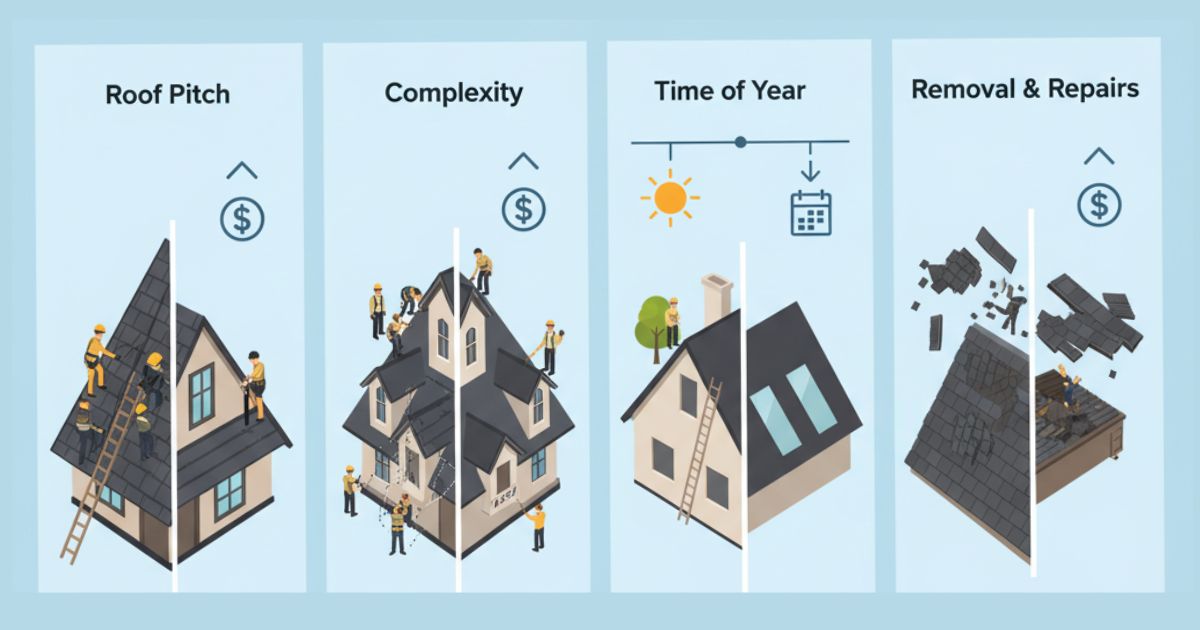
Roof Angle or Pitch
The slope of your roof significantly affects labor costs.
- Steep Roofs: Require more safety equipment and additional labor, increasing roofing installation cost.
- Low-Pitched Roofs: Easier to work on, reducing labor hours and overall cost.
- Savings Tip: When possible, choose roofing designs with moderate pitch to minimize labor complexity.
Roof Complexity
Complex roof designs, including multiple dormers, valleys, and hips, require additional labor for proper installation.
- Simple Designs: Straightforward gable or hip roofs reduce labor time.
- Complex Designs: Intricate layouts increase labor costs due to precise cutting, fitting, and safety precautions.
- Planning Tip: Simplifying roof design where possible can significantly lower labor costs without compromising aesthetics.
Time of Year
Roofing labor costs fluctuate seasonally.
- Peak Season: Summer months often have higher labor rates due to increased demand.
- Off-Peak Season: Early spring or late fall can offer lower labor rates and more contractor availability.
- Cost-Saving Strategy: Scheduling roof replacement during off-peak periods can reduce labor charges.
Location
Labor costs vary by region. Urban areas like New York typically have higher wages than suburban or rural locations.
- Consider Contractor Location: Hiring a reputable local contractor may reduce travel costs and overhead.
- Comparison: Obtain multiple roof replacement estimates from nearby contractors to identify competitive labor pricing.
Removal and Disposal of Old Roof
Removing old roofing materials adds labor hours and disposal fees.
- Full Tear-Off: Ensures a clean surface but increases labor costs.
- Overlay Installation: Installing new shingles over existing layers can reduce labor but may shorten roof lifespan.
- Recommendation: Balance cost savings with long-term durability when deciding between full removal and overlay.
Necessary Repairs During Installation
Unexpected repairs, such as replacing damaged decking or reinforcing rafters, can increase labor costs.
- Inspection: Conduct a thorough pre-installation inspection to identify issues early.
- Budget Planning: Include a contingency for labor related to repairs to avoid surprises.
By considering roof angle, complexity, timing, location, removal methods, and necessary repairs, homeowners can manage and reduce labor costs effectively. Strategic planning ensures that the roof replacement project stays within budget while maintaining quality and safety standards.
How We Determined New Roof Pricing
Understanding how roof replacement costs are calculated helps homeowners make informed decisions and compare estimates from different roofing contractors. Pricing depends on materials, labor, complexity, and additional factors that affect the total cost of a new roof.
Material Costs
Roofing materials are the foundation of new roof pricing.
- Type of Material: Asphalt shingles, metal panels, clay tiles, slate, and synthetic materials all have different price points.
- Quality and Brand: Higher-quality or branded materials cost more but often provide longer lifespan and durability.
- Quantity Needed: Larger roofs require more materials, increasing total roofing cost.
Labor Costs
Labor represents a significant portion of roof replacement costs.
- Installation Complexity: Steep pitches, multiple roof levels, and intricate designs increase labor time and costs.
- Contractor Experience: Experienced, licensed contractors often charge higher rates but provide better quality installation.
- Regional Wage Variations: Urban areas like New York have higher labor rates compared to rural areas.
Additional Costs
Extra costs can influence overall roof replacement pricing.
- Tear-Off and Disposal: Removing old roofing materials requires time, labor, and disposal fees.
- Permits: Required by local regulations and vary by municipality.
- Inspections and Repairs: Pre-installation inspections and necessary structural repairs add to total costs.
Roof Size and Complexity
The size and complexity of the roof directly impact pricing.
- Roof Area: Measured in square feet, larger roofs require more materials and labor.
- Design Features: Dormers, valleys, and skylights increase labor costs due to precise installation needs.
Seasonal and Market Factors
Roof replacement pricing can vary depending on market demand and season.
- Peak Seasons: Labor and material costs can be higher during summer months when demand is strong.
- Off-Peak Discounts: Scheduling during spring or late fall may offer reduced rates.
Conclusion
Our new roof pricing is determined by a combination of material costs, labor charges, roof size, design complexity, and additional fees. By providing detailed roof replacement estimates, homeowners can compare options, plan budgets, and ensure a durable, long-lasting roof. Transparent pricing helps avoid unexpected costs and ensures homeowners receive value for their investment.
Frequently Asked Questions
Homeowners often have many questions when considering a roof replacement. Answering these FAQs provides clarity on roof replacement cost, process, and long-term considerations.
Do I Need a Roof Warranty?
A roof warranty provides protection for both materials and workmanship.
- Material Warranty: Covers defects in shingles, tiles, or metal panels for a specified period.
- Workmanship Warranty: Ensures proper installation and protects against premature roof failure.
- Importance: A valid warranty can save significant costs if issues arise after installation.
When Is the Best Time of Year to Get a New Roof?
Timing can affect labor costs and project efficiency.
- Off-Peak Seasons: Early spring and late fall often provide lower labor rates and more contractor availability.
- Weather Considerations: Avoiding extreme winter or heavy rain months reduces risk of delays and damage during installation.
What Does Your Work Agreement Actually Tell You?
Understanding your roofing contract protects your investment.
- Detailed Estimate: Should include material costs, labor, permits, and additional fees.
- Timeline and Scope: Clarifies start and end dates, responsibilities, and work process.
- Warranty Terms: Confirms coverage for materials and installation.
How Does a New Roof Affect the Value of Your Home?
A new roof improves both aesthetics and functionality.
- Curb Appeal: Enhances the visual appeal of your home, attracting potential buyers.
- Structural Integrity: Protects the home from leaks, water damage, and insulation issues.
- Resale Value: Homes with new roofs often sell faster and at higher prices.
How Long Does a New Roof Project Take?
The duration of roof replacement depends on size, material, and complexity.
- Small Roofs: Typically completed in 1–3 days.
- Medium to Large Roofs: May take 4–7 days or longer depending on complexity and weather conditions.
- Inspection and Cleanup: Final inspections and debris removal add additional time but ensure quality.
How Much Will a New Roof Cost?
Roof replacement cost varies based on materials, labor, size, and complexity.
- Average Roof Replacement Cost: Asphalt shingles range from $10,000 to $20,000 for standard homes. Premium materials like slate or clay tiles can exceed $50,000.
- Factors Influencing Cost: Roof size, material type, pitch, and labor complexity all impact total pricing.
Can I Finance My Roof Replacement?
Financing options allow homeowners to manage expenses without delaying necessary work.
- Home Equity Loans: Borrow against home equity for lower interest rates.
- Insurance Claims: May cover roof damage from storms or other covered perils.
- Personal Loans: Flexible, unsecured loans that can cover part or all of the roof replacement cost.
How Do I Choose the Right Roofing Contractor?
Selecting a qualified contractor ensures proper installation and long-term durability.
- Check Licensing and Insurance: Protects against liability and ensures compliance with building codes.
- Experience and Reputation: Look for contractors with strong references and a track record of successful roof replacements.
- Compare Estimates: Obtain multiple quotes to evaluate fair pricing and services offered.


